About Lemon Button Fern

Lemon Button Fern Introduction

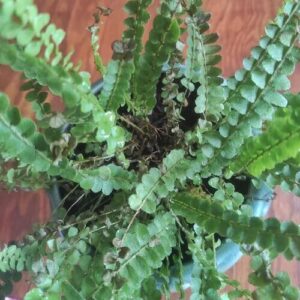
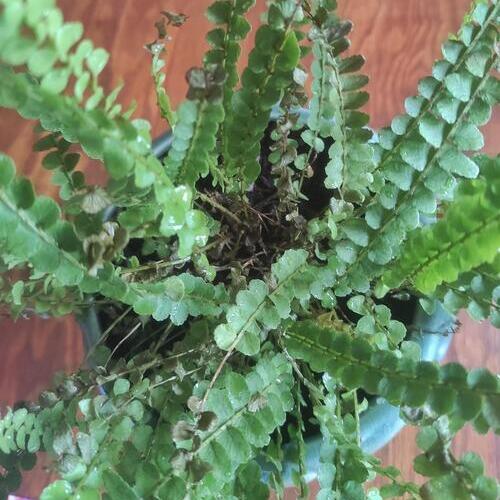
The Lemon Button Fern (Nephrolepis cordifolia ‘Duffii’) is a compact, whimsical cultivar of the tuberous sword fern, prized for its small, round, ruffled leaflets that resemble tiny buttons strung along arching fronds. Unlike the long, tapering fronds of its parent species, ‘Duffii’ produces dense, tufted growth that rarely exceeds 12 to 18 inches in height, making it a favorite for tabletops, terrariums, and hanging baskets. When lightly bruised or crushed, the foliage releases a faint citrus-like scent, which is the source of its common name, though the fragrance is subtle and not always noticeable in typical indoor conditions.

This fern belongs to a genus native to tropical and subtropical regions across Asia, Australia, Africa, and the Pacific Islands, where related species are often found growing epiphytically on trees or terrestrially in leaf litter along forest floors. Like other members of Nephrolepis, ‘Duffii’ produces small tuberous structures along its rhizomes and wiry runners called stolons, which store water and energy, allowing the plant to survive brief periods of drought or neglect better than many other ferns.

Horticulturally, the Lemon Button Fern is valued for its low, mounding habit, fine texture, and tolerance of average indoor humidity compared to more finicky fern species such as the Maidenhair Fern. It is a non-flowering vascular plant that reproduces via spores produced in sori on the undersides of mature fronds, as well as vegetatively through its stoloniferous growth habit, which makes it relatively easy to divide and propagate at home.

Lemon Button Fern Care & Growing Guide

Caring for the Lemon Button Fern centers on replicating the dappled, humid conditions of its native forest floor habitat. It thrives in bright, indirect light, consistently moist (but not soggy) soil, and moderate to high humidity. Because of its tuberous water-storing structures, it is somewhat more forgiving of inconsistent watering than many other fern species, but it still performs best with a regular care routine rather than being allowed to fully dry out or sit in standing water.

A well-draining, peat-based potting mix rich in organic matter will support healthy root development, and the plant benefits from a light monthly feeding during the growing season. Repotting every one to two years, along with occasional grooming to remove yellowing or spent fronds, keeps the plant looking full and tidy. Its compact size and shallow root system make it well suited to shallow pots, dish gardens, and mixed container plantings.

Overall, the Lemon Button Fern is considered an excellent choice for beginner to intermediate houseplant growers who want the delicate, textural appeal of a fern without the exacting humidity demands of more sensitive species. With consistent moisture, filtered light, and periodic feeding, it will reward growers with dense, cheerful mounds of button-shaped foliage year-round.

 Soil Soil

The Lemon Button Fern prefers a light, well-draining, and moisture-retentive potting mix rich in organic matter, similar to what it would encounter in leaf litter on a forest floor. A blend of standard peat-based potting mix combined with perlite or coarse sand for drainage, along with a portion of compost or well-rotted organic matter, works well. The ideal soil pH is slightly acidic to neutral, generally in the range of 5.0 to 7.0. Amendments such as sphagnum peat moss or coco coir help retain consistent moisture, while perlite or pumice prevents compaction and waterlogging. Good soil structure directly affects root health: overly dense or compacted soil restricts oxygen to the roots and encourages rot, while overly fast-draining soil can cause the plant to dry out too quickly between waterings. Common soil problems to watch for include poor drainage, which leads to root rot and fungal issues; compaction, which suffocates roots over time and should be addressed by repotting into fresh, aerated mix; inappropriate pH, which can lock out nutrients even when fertilizer is applied; salt build-up from tap water or over-fertilization, which shows as white crust on the soil surface and can be flushed out with thorough watering; nutrient deficiencies, often visible as pale or yellowing fronds; and root boundness, which occurs when the plant has outgrown its pot and requires division or repotting into a larger container.

 Fertilizer Fertilizer

During the active growing season from spring through early fall, the Lemon Button Fern benefits from a diluted, balanced liquid houseplant fertilizer (such as a 20-20-20 or similar formulation) applied at roughly half strength once every four to six weeks. Feeding should be reduced or stopped entirely in fall and winter when growth naturally slows. Signs of over-fertilization include browned or burnt frond tips, a white crust of salts on the soil surface, and stunted or distorted new growth, while under-fertilization typically presents as pale, yellowish fronds, slow growth, and generally diminished vigor over time. Organic alternatives such as diluted fish emulsion, compost tea, or worm castings worked into the topsoil can provide a gentler, slow-release source of nutrients and are well tolerated by this species. Like many ferns, it has a relatively light nitrogen requirement compared to flowering houseplants, and excessive nitrogen can lead to soft, weak growth, so a balanced, diluted approach is generally safer than heavy feeding.

 Watering Watering

The Lemon Button Fern likes consistently moist soil and should be watered whenever the top inch of soil begins to feel dry to the touch, generally every five to seven days indoors, though this varies with light, temperature, and humidity. It prefers room-temperature water and tends to do best with filtered, distilled, or rainwater, since it can be somewhat sensitive to the chlorine, fluoride, and dissolved salts found in some tap water, which may cause leaf tip browning over time. Signs of underwatering include crispy, curling, or browning frond tips and an overall wilted or shriveled appearance, while overwatering typically shows up as yellowing fronds, a mushy or blackened base, and a sour smell from the soil indicating root rot. During the active growing season in spring and summer, watering frequency and volume should increase slightly to support new growth, while in fall and winter, when growth slows, the soil can be allowed to dry slightly more between waterings to prevent rot in cooler, lower-light conditions.

Lemon Button Fern Watering Calculator

🪴 Precision Watering Intelligence

Science-Based Hydration for Your Collection

Stop guessing. Most houseplant failures are caused by volumetric errors and improper moisture tension. Our deterministic calculator moves beyond "once-a-week" watering by analyzing the four critical pillars of root health:

  • • Transpiration Coefficients: 120+ species mapped by metabolic rate.
  • • Substrate Porosity: Adjusts for Standard vs. Cactus/Well-Draining mixes.
  • • Geometric Volume (V = π r² h): Calculates exact cups based on pot surface area.
  • • The Drainage Factor: Accounts for pot material (Terracotta) and the risk of a perched water table.

Personalized for this plant

6"
🪴
--
approx. every --

Disclaimer: Our calculator is pretty smart. We’ve crunched the numbers, but we’re not measuring the quantum state of your living room. Since we don’t know your exact indoor temperature, humidity, light, airflow, or whether your plant receives daily sweet nothings and motivational speeches, use this calculator as a guide—and always keep an eye on your plant.

 Lighting Lighting

This fern grows best in bright, indirect light, similar to the filtered sunlight it would receive beneath a forest canopy. An east-facing or filtered south- or west-facing window is ideal, and it also performs well several feet back from a bright window or under sheer curtains. Direct, intense sunlight, especially afternoon sun, can scorch the delicate fronds, causing brown, crispy patches or bleached, faded coloring. Insufficient light, on the other hand, leads to sparse, leggy growth, smaller leaflets, and a duller green color as the plant stretches toward available light. If natural light is inadequate, a grow light positioned 12 to 24 inches above the plant and run for 10 to 12 hours a day can supplement or replace sunlight effectively. Rotating the pot periodically also helps ensure even growth on all sides.

 Tempature Temperature

The Lemon Button Fern thrives in typical indoor temperatures between 60 and 75°F (16 to 24°C) and does not tolerate frost or freezing conditions. It can handle brief dips to around 50°F (10°C) without lasting damage, but prolonged exposure to cold will cause blackened, damaged fronds and can kill the plant outright. On the other end, sustained heat above 85°F (29°C), especially when combined with low humidity, can cause stress, wilting, and increased water loss through the foliage. The plant is best kept away from cold drafts, air conditioning vents, heating vents, and drafty windows or doors, all of which can cause sudden temperature swings that stress the fern. In climates with mild winters, it can be grown outdoors in shaded or filtered-light areas during the warm season but should be brought indoors before temperatures drop toward freezing.

 Humidity Humidity

As a rainforest-adjacent species, the Lemon Button Fern prefers moderate to high humidity, ideally in the range of 50 percent or higher, though it is more tolerant of average household humidity than many other fern species thanks to its water-storing tubers. In dry indoor air, particularly during winter heating season, low humidity stress appears as browning, crispy frond edges and tips, increased leaf drop, and a generally dry, brittle texture to the foliage. Excessively high humidity combined with poor air circulation can occasionally encourage fungal issues, though this is less common than low-humidity stress. Effective ways to increase humidity include grouping plants together to create a moisture-rich microclimate, placing the pot on a pebble tray filled with water so that evaporation raises local humidity without waterlogging the roots, running a small humidifier nearby, or growing the fern in a naturally humid space such as a bathroom or kitchen with adequate light. Misting can offer a brief, temporary humidity boost but is generally less effective and longer-lasting than a pebble tray or humidifier.

 ropagation Propagation

The Lemon Button Fern is most commonly and successfully propagated through division, since its cultivar status means it does not reliably come true from spores. Division also tends to establish more quickly than spore propagation, which can take several months to produce visible new growth. To divide the plant: 1) Remove the fern from its pot and gently loosen the root ball to expose the rhizomes and tubers. 2) Identify natural clumps or sections that each have healthy roots, tubers, and at least a few fronds attached. 3) Use a clean, sharp knife or your fingers to separate the clumps into individual sections, taking care to keep as much root mass intact as possible. 4) Plant each division into its own small pot filled with fresh, well-draining potting mix. 5) Water thoroughly and place the new divisions in bright, indirect light with high humidity, such as under a humidity dome or clear plastic cover, for the first few weeks. 6) Keep the soil consistently moist while new growth establishes, then gradually acclimate the divisions to normal care once new fronds appear, typically within four to eight weeks. Division is best performed in spring or early summer at the start of the active growing season, when the plant can recover and establish quickly. Spore propagation, while possible, is slower, less predictable for this cultivar, and generally reserved for hobbyists interested in fern breeding rather than typical home propagation.

 Potting Potting

A shallow, wide pot with ample drainage holes suits the Lemon Button Fern’s fibrous, spreading root system better than a deep pot. Terracotta or unglazed ceramic pots are good choices because they allow excess moisture to evaporate through the pot walls, reducing the risk of root rot. The potting mix should be light, well-draining, and rich in organic matter, as described in the soil section. Repotting is generally needed every one to two years, or when the plant becomes visibly root-bound, which shows up as roots circling densely at the base, water running straight through the pot without being absorbed, slowed growth, or the plant lifting slightly out of the soil as tubers multiply. When repotting, gently loosen any circling roots and trim away dead or mushy sections with clean, sharp scissors, but avoid aggressive root pruning, since ferns generally establish best with minimal root disturbance. Move the plant into a pot only one size larger than its current container to avoid overly wet, poorly aerated soil in an oversized pot. After repotting, water thoroughly, keep the plant in indirect light, and maintain slightly higher humidity for one to two weeks to reduce transplant stress while new roots establish.

 Pruning Pruning

Best Time to Prune

The ideal time to prune a Lemon Button Fern is during the active growing season in spring or summer, when the plant recovers quickly from grooming.

Frequency

Light grooming can be done every few weeks as needed, while a more thorough cleanup is typically done once or twice a year.

Purpose

Pruning removes dead, yellowing, or damaged fronds, encourages fuller and denser growth, and keeps the plant looking tidy and healthy.

Tools and Preparation

Use clean, sharp pruning snips or scissors, ideally sterilized with rubbing alcohol before and after use to prevent the spread of disease between plants.

Step-by-Step Pruning Guide

  1. Inspect the plant and identify fronds that are yellowed, browned, wilted, or otherwise damaged.
  2. Using sterilized scissors, snip each unwanted frond at its base, close to the soil line or main stem, rather than mid-frond.
  3. Remove any spent or leggy stolons if you are not intending to use them for propagation.
  4. Trim back any overly long or sparse fronds to encourage a fuller, more compact shape if desired.
  5. Dispose of removed foliage rather than leaving it in the pot, to reduce the risk of fungal growth or pest attraction.
  6. Water the plant lightly after pruning to help reduce stress.

Aftercare

Keep the freshly pruned plant in its normal bright, indirect light location and maintain consistent humidity and moisture to support new growth.

Special Considerations

Avoid removing more than about one-third of the plant’s foliage at one time, as overly aggressive pruning can stress the fern and slow its recovery.

 Blooming Blooming

As a fern, Nephrolepis cordifolia ‘Duffii’ does not produce flowers at any time of year. It reproduces via spores rather than blooms. Spore production, when it occurs, typically appears as small brown dots (sori) on the undersides of mature fronds during periods of active growth in warm, humid conditions, most commonly in spring and summer. There are no petals, blossoms, or floral fragrance associated with this species; its ornamental value comes entirely from its foliage texture and form.

 Pests & Diseases Pests and Diseases

Pests

Name: Mealybugs

Symptoms: Small, white, cottony clusters on stems and the undersides of fronds; sticky honeydew residue; yellowing or distorted foliage.

Treatment: Wipe affected areas with a cotton swab dipped in rubbing alcohol, then treat the whole plant with insecticidal soap or neem oil, repeating every 7 to 10 days until the infestation clears.

Name: Scale insects

Symptoms: Small, brown or tan bumps attached to stems and frond undersides; sticky honeydew; yellowing or weakened fronds.

Treatment: Scrape off visible scale with a fingernail or soft brush, then apply horticultural oil or insecticidal soap, repeating treatments over several weeks to catch newly hatched insects.

Name: Spider mites

Symptoms: Fine webbing on the undersides of fronds, tiny speckled or stippled discoloration on leaflets, and an overall dusty or dry appearance, especially in low-humidity conditions.

Treatment: Increase humidity, rinse the plant thoroughly under lukewarm water, and treat with insecticidal soap or neem oil, repeating every five to seven days for two to three weeks.

Name: Fungus gnats

Symptoms: Small, dark flying insects around the soil surface; larvae feeding on organic matter and occasionally fine roots, which can weaken young plants.

Treatment: Allow the topsoil to dry out slightly between waterings, use yellow sticky traps to catch adults, and apply a BTI-based (Bacillus thuringiensis israelensis) soil drench to target larvae.

Diseases

Name: Root rot

Symptoms: Mushy, blackened rhizomes or tubers, wilting despite moist soil, yellowing fronds, and a sour or rotten smell from the soil.

Treatment: Remove the plant from its pot, trim away all rotten roots and tubers with sterilized scissors, repot into fresh, well-draining mix, and reduce watering frequency going forward.

Name: Leaf spot (fungal or bacterial)

Symptoms: Small brown, black, or water-soaked spots on the fronds, sometimes surrounded by a yellow halo, which can spread and cause leaflet drop.

Treatment: Remove and dispose of affected fronds, improve air circulation around the plant, avoid overhead watering that wets the foliage, and apply a copper-based fungicide if the issue persists.

Name: Botrytis (gray mold)

Symptoms: Fuzzy gray mold growth on fronds or stems, typically in overly humid, poorly ventilated conditions with stagnant air.

Treatment: Remove affected foliage, increase air circulation, avoid misting directly onto damaged tissue, and treat with a fungicide labeled for botrytis if the problem continues.

 Special Features Special Features

The Lemon Button Fern stands out among houseplant ferns for its charmingly compact, ruffled, button-shaped leaflets, which give it a distinctly textural and whimsical appearance quite different from the typical long, feathery fern frond. Its dense, mounding growth habit and small stature make it especially well suited to terrariums, fairy gardens, dish gardens, and other small-scale plantings where larger ferns would overwhelm the space. When brushed or lightly crushed, the foliage can release a faint citrus-like scent, adding a subtle sensory element to its appeal. Because it stores water and energy in small tubers along its rhizomes, it is somewhat more resilient to occasional missed waterings than many other fern species, making it a more forgiving option for growers who love the fern aesthetic but want a slightly lower-maintenance plant. It is also valued for being non-toxic to pets, which further broadens its appeal for households with curious animals.

 Benefits Plant Benefits

The Lemon Button Fern is grown primarily for ornamental and psychological well-being purposes rather than for established herbal or pharmaceutical use. Unlike its relative Nephrolepis exaltata (Boston Fern), which has been studied for modest air-purifying qualities, ‘Duffii’ has not been extensively researched for specific medicinal compounds, and no significant herbal or pharmaceutical applications are widely documented for this cultivar. Its main benefits are aesthetic and environmental: as with many houseplants, its presence is generally associated with modest improvements in indoor ambiance, humidity, and general well-being through biophilic effects, though it should not be relied upon for any therapeutic or medicinal purpose.

  Additional Information Additional Information

The Lemon Button Fern is a cultivar rather than a naturally occurring wild species, having been selected and propagated for its distinctive rounded, ruffled leaflet shape. It belongs to the same species, Nephrolepis cordifolia, that has become naturalized and in some regions considered invasive outdoors in parts of the southeastern United States and other warm climates, though the compact ‘Duffii’ cultivar is far less vigorous and spreading than the wild form and is grown almost exclusively as a container houseplant. It is not related to true citrus plants despite its common name, which refers only to its faint lemony scent when the foliage is disturbed.

  Lifecycle Life Cycle

As a fern, the Lemon Button Fern follows the typical two-stage fern life cycle, alternating between a sporophyte and gametophyte generation, though in cultivation it is grown and propagated almost entirely as a sporophyte via division. In its visible, familiar form, new fronds unfurl from tightly coiled structures called fiddleheads, gradually expanding into mature, button-leafleted fronds over several weeks. The plant continuously produces new fronds from its rhizome throughout the growing season, while older fronds naturally yellow, die back, and are replaced. Small tubers form along the rhizomes and stolons over time, storing energy and water, and these tubers can also give rise to new plantlets, allowing the fern to spread and multiply vegetatively. Under ideal indoor conditions, a Lemon Button Fern can live and continue producing new growth for many years, particularly with periodic division and repotting to prevent overcrowding.

  Plant ToxicityAre Lemon Button Fern Poisonous, Toxic

The Lemon Button Fern is considered non-toxic to cats, dogs, and humans, including children, according to the ASPCA’s list of pet-safe plants. No part of the plant, including the fronds, tubers, or rhizomes, is known to contain toxic compounds. Because it is generally safe, ingestion by pets or children typically does not cause poisoning; however, mechanical irritation from chewing fibrous plant material can occasionally cause mild, temporary gastrointestinal upset such as vomiting or diarrhea in sensitive animals. If a pet or child ingests a large quantity and shows persistent vomiting, lethargy, or refusal to eat, it is still wise to contact a veterinarian, pediatrician, or poison control center out of caution, since individual sensitivities vary. As a preventive measure, it is good practice to keep any houseplant out of easy reach of curious pets and young children and to discourage chewing on foliage in general.

 FAQ Frequently Asked Questions

Can I grow this plant in my indoor spaceCan I grow Lemon Button Fern in my indoor space

Difficulty: Easy

Size: Small

Light: Medium

Water: Medium

Flowering: No

Pet Safe: Yes

Air Purifier: Low

Can I grow this plant in my indoor spaceNephrolepis cordifolia 'Duffii' botanical details

Common Name: Lemon Button Fern

Other Common Names: Duffii Fern, Fishtail Sword Fern, Button Sword Fern, Tuberous Sword Fern 'Duffii', Ruffled Sword Fern

Botanical Name: Nephrolepis cordifolia 'Duffii'

Native Area: Tropical and subtropical regions of Asia, Australia, Polynesia, and parts of Africa; the parent species Nephrolepis cordifolia is widely distributed across these regions, and the 'Duffii' cultivar was developed from this naturally occurring species.

Family Name: Nephrolepidaceae (sometimes classified under Lomariopsidaceae or Davalliaceae depending on taxonomy)

Plant Type: Perennial fern (herbaceous, evergreen)

Genus: Nephrolepis

Kingdom: Plantae

 Photo Gallery Photo Gallery

 Care recommendationsMy Lemon Button Fern Plant Care Recommendations

  •   Buy onlineBuy Lemon Button Fern Online

    “Bring Home This Beauty Today”

    “Get Your Own Lemon Button Fern Before It’s Gone”

    “Shop Trusted Sellers – Limited Availability”

    “Free Delivery”

    Lemon Button Fern Plant Care
    Lemon Button Fern Plant Care

    As an Amazon Associate, I earn commission from qualifying purchases.

      Plant Joke Plant Puns and Jokes

    Why did the Lemon Button Fern refuse to tell jokes about citrus? It didn’t want to be a-peel-ing for approval, it just wanted people to like it for its fronds.

    Newsletter Signup Signup to our newsletter and download Lemon Button Fern care guide

    AI Julie Chatbot, ask me!
    Let's ask AI Julie
    Chatbot Icon