


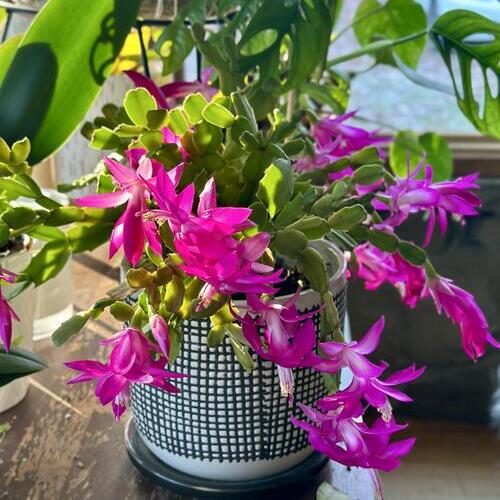
The Thanksgiving Cactus (Schlumbergera truncata) is a popular flowering succulent prized for its ability to produce vivid, tubular blooms right around the American Thanksgiving holiday, giving rise to its common name. Unlike desert cacti, this species is epiphytic, meaning it naturally grows attached to trees and rocky crevices rather than rooted in soil, absorbing moisture and nutrients from decaying organic matter, rainfall, and humidity in the air around it. Its flattened, segmented stems, called cladodes, have distinctive pointed “claw-like” projections along the margins, which is why the plant is sometimes referred to as the Crab Cactus or Claw Cactus.nnNative to the coastal mountain forests of southeastern Brazil, particularly the Serra do Mar range, Schlumbergera truncata evolved in the dappled shade of the rainforest canopy, where it clings to tree branches and rock outcrops in cool, humid microclimates. This origin explains many of its cultivation preferences: bright but indirect light, high humidity, and a dislike of both scorching sun and bone-dry soil. In its native habitat, the plant experiences a natural drop in temperature and day length during the Southern Hemisphere autumn, which triggers the formation of flower buds, a cycle that growers replicate indoors to encourage blooming each year.nnThe plant itself is a woody-based, sprawling to trailing perennial that can eventually develop long, cascading stems, making it a favorite for hanging baskets as well as tabletop displays. Its blossoms, which range from vibrant reds, pinks, and oranges to whites and purples depending on the cultivar, are structurally unique among cacti: they possess a symmetrical, multi-layered corolla with recurved petals and prominent, protruding stamens, quite different from the flat, radially symmetrical flowers typical of desert cacti. With proper care, a mature Thanksgiving Cactus can live for decades and is frequently passed down through generations as a treasured heirloom houseplant.
Caring for a Thanksgiving Cactus revolves around mimicking its native rainforest-epiphyte habitat: bright, indirect light, consistently moist but never soggy soil, and above-average humidity. Place the plant near an east- or north-facing window where it receives gentle morning light or filtered sun throughout the day. Direct, intense afternoon sun can scorch the flattened stem segments, causing them to turn reddish or develop bleached patches, while too little light will result in a leggy plant that produces few, if any, flowers.nnWatering is arguably the most important aspect of care. Because the plant is an epiphyte rather than a true desert cactus, it should never be allowed to dry out completely for extended periods; instead, water thoroughly whenever the top inch of the potting mix feels dry, then allow excess water to drain away completely so the roots are never sitting in standing water. During the cooler months when the plant is setting buds and flowering, keep the soil lightly and evenly moist, and during its post-bloom rest period, reduce watering slightly to allow a brief dormancy. Use room-temperature water and, where possible, filtered or rainwater, since sensitive roots can react poorly to heavily chlorinated or fluoridated tap water over time.nnBeyond light and water, the Thanksgiving Cactus benefits from consistent temperatures between 65-70°F (18-21°C) during the day, a well-draining, slightly acidic potting mix formulated for cacti or epiphytes, and monthly feeding with a diluted, balanced fertilizer during its active growing season in spring and summer. To encourage the holiday bloom, the plant needs six to eight weeks of longer, uninterrupted nights (roughly 12-14 hours of darkness) and cooler nighttime temperatures in early autumn; keeping it away from artificial light sources at night during this period is essential for reliable flowering.
 Soil
Soil
The Thanksgiving Cactus thrives in a light, fast-draining potting mix that mimics the organic debris found in tree crevices in its native rainforest habitat, rather than the sandy mix used for desert cacti. A blend of standard potting soil, coarse perlite or pumice, and a small amount of peat moss or coconut coir works well, aiming for a mix that holds a little moisture while still draining freely. Ideal soil pH is slightly acidic, in the range of 5.5 to 6.5, since alkaline conditions can interfere with nutrient uptake and lead to yellowing. Amendments such as orchid bark or well-composted organic matter can improve aeration and replicate the loose, humus-rich pockets the plant would root into in the wild. Because the roots are relatively fine and easily damaged by waterlogging, soil composition has a direct effect on plant health: overly dense or compacted soil restricts oxygen to the roots and encourages rot, while soil that is too sandy or fast-draining may not retain enough moisture for consistent growth and flowering. Common soil problems include poor drainage leading to root rot, compaction from heavy potting soil over time, inappropriate pH causing nutrient lockout, salt build-up from over-fertilizing or hard tap water (visible as a white crust on the soil surface), nutrient deficiencies from old, depleted potting mix, and root boundness in pots that have not been refreshed or sized up in several years.
 Fertilizer
During the active growing season from spring through late summer, feed the Thanksgiving Cactus every three to four weeks with a balanced, water-soluble fertilizer diluted to half strength, or a fertilizer formulated for cacti and succulents or flowering houseplants. Suspend fertilizing during the six-to-eight-week bud-setting period in early autumn and throughout the bloom itself, then resume light feeding once new growth appears after flowering. Signs of over-fertilization include a white crust on the soil surface, browning or burned-looking stem tips, and stunted or distorted new growth, while under-fertilization typically presents as pale, weak-looking segments, slow growth, and few or no flowers despite otherwise adequate light and temperature. Organic alternatives include diluted fish emulsion, compost tea, or worm castings worked lightly into the topsoil, all of which provide a gentler, slow-release source of nutrients. This species has a particular need for adequate phosphorus and potassium during the pre-bloom period to support strong bud development, alongside a moderate nitrogen supply to sustain healthy segment growth.
 Watering
Water the Thanksgiving Cactus thoroughly whenever the top inch of soil feels dry to the touch, then allow any excess water to drain completely from the pot; the plant should never be left sitting in a saucer of standing water. Room-temperature filtered water or rainwater is preferable to heavily chlorinated or fluoridated tap water, which can cause mineral buildup and leaf-tip browning over time if used consistently. Overwatering symptoms include mushy, translucent, or discolored stem segments, a foul smell from the soil, and segments dropping off; underwatering symptoms include shriveled, limp, or wrinkled segments and dry, pulling-away soil. Watering needs shift seasonally: during the active growing season in spring and summer, keep the soil evenly moist; after flowering, during the brief winter dormancy, reduce watering to allow the top couple of inches of soil to dry out between waterings; and during bud set and blooming in fall, maintain slightly more consistent moisture, since inconsistent watering at this stage can cause buds to drop prematurely.
Stop guessing. Most houseplant failures are caused by volumetric errors and improper moisture tension. Our deterministic calculator moves beyond "once-a-week" watering by analyzing the four critical pillars of root health:
Personalized for this plant
Disclaimer: Our calculator is pretty smart. We’ve crunched the numbers, but we’re not measuring the quantum state of your living room. Since we don’t know your exact indoor temperature, humidity, light, airflow, or whether your plant receives daily sweet nothings and motivational speeches, use this calculator as a guide—and always keep an eye on your plant.
 Lighting
Thanksgiving Cactus prefers bright, indirect light, such as that found near an east-facing window or a few feet back from a south- or west-facing window with a sheer curtain. In its native habitat it grows in the filtered light beneath a forest canopy, so direct, intense sun, especially summer afternoon sun, can scorch the flattened stem segments, causing reddish, bronzed, or bleached patches. Signs of insufficient light include a leggy, stretched growth habit, pale or yellowish-green stem segments, and a failure to produce flower buds despite otherwise good care. Signs of excessive light include reddish or purplish discoloration of the segments, dry or shriveled tips, and visible scorch marks. If natural light is suboptimal, the plant can be supplemented with a full-spectrum grow light placed 12-18 inches away for 10-12 hours a day, though care must be taken to still provide the plant with the long, uninterrupted dark period it needs in autumn to trigger blooming.
 Temperature
The Thanksgiving Cactus grows best in daytime temperatures between 65-70°F (18-21°C) and can tolerate a slightly wider range during its active growing season. It is not frost-hardy and should never be exposed to temperatures below about 50°F (10°C) for extended periods, nor to hot, direct heat sources or drafts from heating vents. Interestingly, a period of cooler nighttime temperatures, around 50-55°F (10-13°C) for six to eight weeks in early autumn, combined with long nights, is beneficial and even necessary to trigger flower bud formation. The plant tolerates gradual temperature fluctuations reasonably well but reacts poorly to sudden swings, drafts, or being placed near cold windows in winter or air conditioning vents in summer, which can cause bud and flower drop. To protect the plant from extremes, keep it away from exterior doors, drafty windows, and heating or cooling vents, and bring any plants that spend summer outdoors inside well before the first frost.
 Humidity
This species prefers moderate to high humidity, ideally in the range of 50-60%, reflecting its epiphytic, rainforest origins. In typical indoor conditions, especially during winter when heating systems dry the air, humidity can drop well below this range, leading to stress symptoms such as shriveled or limp stem segments, crispy or browning tips, and premature bud or flower drop. High humidity is rarely a problem for this plant, though extremely poor air circulation combined with constant dampness can encourage fungal issues. To raise humidity, growers can use a pebble tray filled with water positioned beneath (not touching) the pot, run a small room humidifier nearby, group the plant with other houseplants to create a shared humid microclimate, or occasionally mist the foliage in the morning so it dries by evening. Pebble trays and humidifiers tend to be the most consistently effective methods, while misting offers only a brief, temporary boost.
 Propagation
Thanksgiving Cactus is most commonly and easily propagated from stem cuttings, though it can also be grown from seed, a much slower and less predictable method typically reserved for hybridizers. Stem cutting propagation step-by-step guide: 1. Select a healthy, mature stem and use clean, sharp scissors or your fingers to remove a segment consisting of two to four flattened joints, cutting or twisting it off at a natural joint. 2. Allow the cut end of the cutting to air-dry and callus over for one to three days in a cool, shaded spot, which helps prevent rot once planted. 3. Prepare a small pot with a well-draining cactus or succulent mix, lightly moistened beforehand. 4. Insert the callused end of the cutting about one-third of its length into the soil, positioning it upright, and gently firm the soil around the base. 5. Place the pot in bright, indirect light and keep the soil barely moist, watering sparingly until roots establish. 6. After two to four weeks, gently tug the cutting to check for resistance, which indicates roots have formed; at this point, resume a normal watering schedule. Stem cuttings generally have a high success rate, often above 80-90% under proper conditions, compared to seed propagation, which is slower, less reliable, and can take years to produce a flowering-size plant. The best time to take cuttings is in late spring or early summer, after the plant has finished blooming and entered active growth, and new plants typically establish visible roots within three to six weeks, reaching a modest, sellable size within six months to a year.
 Potting
Thanksgiving Cactus prefers a relatively shallow, wide pot with ample drainage holes, since its root system is fibrous and spreads outward rather than deep, mirroring how it clings to tree bark and shallow rock crevices in nature. A well-draining, slightly acidic potting mix combining standard potting soil, perlite or pumice, and a bit of organic matter such as peat or coconut coir is ideal. This species generally prefers being slightly pot-bound and typically only needs repotting every two to three years, ideally in spring after the blooming cycle has finished and the plant has entered a period of active growth. Signs that repotting is needed include roots visibly emerging from the drainage holes or circling the surface of the soil, water running through the pot too quickly without being absorbed, noticeably reduced flowering, or the plant becoming top-heavy and unstable in its container. When repotting, gently loosen the root ball, trim away any mushy, blackened, or dead roots with clean scissors, and move the plant into a pot only one size larger than the current one, since an oversized pot can hold excess moisture and increase the risk of root rot. After repotting, keep the plant in a shaded, stable location for a week or two, hold off on fertilizing for about a month, and water sparingly until new growth signals the roots have settled in, minimizing transplant stress.
 Pruning
The best time to prune a Thanksgiving Cactus is in late spring or early summer, a few weeks after flowering has finished and the plant has entered its active growth phase, allowing plenty of time to recover before the next bud-setting period in fall.
Pruning encourages a fuller, bushier growth habit, removes damaged or overly long trailing stems, and stimulates the plant to produce more branching points, which in turn can lead to a greater number of flowers in the following bloom season.
Use clean, sharp scissors or simply twist segments off by hand at a natural joint; sterilizing tools beforehand with rubbing alcohol helps prevent the spread of disease between cuts.
Keep the freshly pruned plant in its normal bright, indirect light spot, resume regular watering once any cut ends have calloused, and avoid fertilizing heavily for a couple of weeks to let the plant recover.
Avoid heavy pruning right before the fall bud-setting period, since removing too much healthy growth close to flowering time can reduce the number of blooms that season.
 Blooming
The Thanksgiving Cactus typically blooms from late autumn into early winter, most reliably in November, coinciding with shorter day length and cooler nights. Flowering is triggered photoperiodically: the plant needs roughly six to eight weeks of long, uninterrupted nights (12-14 hours of darkness) combined with cool nighttime temperatures around 50-55°F (10-13°C) to initiate bud set. Once buds form, the overall bloom period can last four to eight weeks, with individual flowers remaining open for several days to over a week each, and new buds opening in succession along the stem tips. Flowers are tubular and multi-tiered, with recurved, pointed petals and prominent protruding stamens, appearing in shades of red, pink, orange, white, purple, or bicolor depending on the cultivar, and they open most fully in bright daylight, partially closing in low light or at night.
 Pests and Diseases
Name: Mealybugs
Symptoms: Small, cottony white masses in the joints between stem segments; sticky honeydew residue; stunted or distorted new growth.
Treatment: Dab visible mealybugs with a cotton swab dipped in rubbing alcohol, then treat the entire plant with insecticidal soap or neem oil, repeating every seven to ten days until the infestation clears.
Name: Spider Mites
Symptoms: Fine webbing between segments, tiny speckled or stippled discoloration on the stems, and an overall dull or bronzed appearance, especially in dry indoor air.
Treatment: Increase humidity, rinse the plant thoroughly under lukewarm water to dislodge mites, and apply insecticidal soap or neem oil, repeating treatments weekly for several weeks.
Name: Fungus Gnats
Symptoms: Small flying insects around the soil surface, with larvae feeding on organic matter and fine roots in overly moist soil.
Treatment: Allow the soil surface to dry out more between waterings, use yellow sticky traps to catch adults, and apply a Bacillus thuringiensis israelensis (Bti) soil drench to kill larvae.
Name: Root Rot
Symptoms: Mushy, blackened roots, wilting or collapsing stem segments despite moist soil, and a foul odor from the potting mix, caused by prolonged overwatering or poor drainage.
Treatment: Remove the plant from its pot, trim away all affected roots with sterilized scissors, repot into fresh, well-draining soil, and reduce watering frequency going forward.
Name: Bacterial or Fungal Soft Rot
Symptoms: Water-soaked, discolored patches on stem segments that quickly become soft and mushy, sometimes with a slimy texture, often spreading from a wound or pest damage.
Treatment: Cut away all affected segments well into healthy tissue using sterilized tools, improve air circulation, avoid overhead watering, and treat remaining healthy cuttings as new propagation material if the main plant is heavily affected.
 Special Features
The Thanksgiving Cactus stands out among houseplants for its reliable, showy autumn and early-winter bloom, producing an abundance of vividly colored, multi-tiered flowers in shades of red, pink, orange, purple, and white that appear precisely when many other plants have gone dormant, making it a beloved seasonal centerpiece for holiday decorating. Its trailing, segmented stems give it an architectural, sculptural quality even when not in flower, and its tolerance for being slightly root-bound, combined with its long lifespan, makes it a plant that is frequently propagated and passed down as a treasured family heirloom across generations. It also adapts well to hanging baskets, pedestal planters, and grouped houseplant displays, offering versatility in home decor beyond its flowering season.
 Plant Benefits
The Thanksgiving Cactus is not widely recognized for significant herbal or pharmaceutical uses, and it is primarily valued as an ornamental houseplant rather than a medicinal one. Some folk traditions in its native Brazil have referenced mild use of related Schlumbergera species in traditional remedies, but there is little scientific research supporting therapeutic applications, so it should not be relied upon for any medicinal purpose.
 Additional Information
The Thanksgiving Cactus is frequently confused with the closely related Christmas Cactus (Schlumbergera x buckleyi) and Easter Cactus (Rhipsalidopsis gaertneri), but it can be distinguished by the pointed, saw-toothed edges of its stem segments, compared to the smoother, more rounded scalloped edges of the Christmas Cactus. Many plants sold generically as “holiday cacti” in stores are actually hybrids between Thanksgiving and Christmas Cactus, which can bloom anywhere from November through January depending on their specific genetic makeup and the light conditions they receive.
 Life Cycle
As a long-lived perennial epiphyte, the Thanksgiving Cactus follows an annual growth cycle rather than an annual life span, often living for decades with proper care. In spring and summer, the plant focuses on vegetative growth, producing new stem segments and roots. As days shorten and nights cool in early autumn, the plant shifts into a reproductive phase, forming flower buds at the tips of mature segments over a period of six to eight weeks. Blooming follows in fall and early winter, after which the plant enters a brief rest period with reduced growth and watering needs before resuming active growth again the following spring, repeating this cycle indefinitely as long as its care conditions are met.
 Are Thanksgiving Cactus Poisonous, Toxic
The Thanksgiving Cactus is generally considered non-toxic to cats, dogs, and humans, and is listed by the ASPCA as safe for pets. However, ingestion of any large quantity of plant material, including the fleshy stem segments, can occasionally cause mild gastrointestinal upset. Affected organisms: cats, dogs, and occasionally curious children who chew on the fleshy segments. Symptoms of mild toxicity may include vomiting, diarrhea, or mild drooling, typically appearing within a few hours of ingestion. Severity is low; serious poisoning is not expected from this species. First aid steps include removing any remaining plant material from the mouth, offering fresh water, and monitoring for symptoms; if vomiting or diarrhea persists beyond 24 hours, or if the pet or child shows signs of lethargy or dehydration, contact a veterinarian, pediatrician, or poison control center. Preventive measures include placing the plant out of reach of pets and small children, using hanging baskets or elevated shelves, and discouraging chewing behavior with deterrent sprays if needed.
 Frequently Asked Questions
Water whenever the top inch of soil feels dry, then let excess water drain fully; avoid letting the plant sit in standing water.
The plant needs six to eight weeks of long, uninterrupted nights and cooler temperatures in early fall to set flower buds; insufficient darkness or light exposure at night is the most common cause of no blooms.
No, it is generally considered non-toxic to pets, though eating large amounts of any plant can cause mild stomach upset.
Thanksgiving Cactus has pointed, saw-toothed edges on its stem segments and typically blooms earlier, while Christmas Cactus has smoother, scalloped edges and tends to bloom slightly later.
Provide six to eight weeks of long nights and cooler temperatures around 50-55°F in early autumn, keep it away from artificial light at night, and maintain consistent watering to encourage bud formation.
A light, well-draining mix of potting soil, perlite or pumice, and a bit of organic matter, with a slightly acidic pH between 5.5 and 6.5, works best.
Take a two-to-four-segment stem cutting, let it callus for a few days, then plant the calloused end in moist, well-draining soil until roots establish, typically within two to four weeks.
Reddish or purplish discoloration usually indicates too much direct sunlight or, less commonly, cold stress; moving the plant to a spot with bright, indirect light typically resolves it.
This plant prefers being slightly pot-bound and generally only needs repotting every two to three years, ideally in spring after blooming has finished.
Bud drop is commonly caused by inconsistent watering, sudden temperature changes, low humidity, or drafts from heating and cooling vents during the bud-setting or blooming period.
 Can I grow Thanksgiving Cactus in my indoor space
Difficulty: Easy
Size: Medium
Light: Medium
Water: Medium
Flowering: Yes
Pet Safe: Yes
Air Purifier: Low
 Schlumbergera truncata botanical details
Common Name: Thanksgiving Cactus
Other Common Names: Crab Cactus, Claw Cactus, False Christmas Cactus, Zygocactus
Botanical Name: Schlumbergera truncata
Native Area: Coastal mountain forests of southeastern Brazil, particularly the Serra do Mar range near Rio de Janeiro, where the plant grows as an epiphyte on trees and among rocky outcrops in humid, shaded forest environments.
Family Name: Cactaceae
Plant Type: Perennial, epiphytic succulent (cactus)
Genus: Schlumbergera
Kingdom: Plantae
 Photo Gallery
 My Thanksgiving Cactus Plant Care Recommendations
If you find the Houseplant Encyclopedia helpful and would like to support Healthy Houseplants, you can use the links below to shop for recommended plants, products, and plant-care supplies.
Some links are affiliate links, which means I may earn a small commission if you make a qualifying purchase through them, at no additional cost to you. Thank you for supporting Healthy Houseplants and helping me continue to provide free plant-care information!

Want even more personalized plant-care help? Check out my AI Julie Chatbot—trained on my 20 years of houseplant knowledge, not just information from the internet!  Try it now:Ask AI Julie
 Buy Thanksgiving Cactus Online
✅ “Bring Home This Beauty Today”
✅ “Get Your Own Thanksgiving Cactus Before It’s Gone”
✅ “Shop Trusted Sellers – Limited Availability”
✅ “Free Delivery”
As an Amazon Associate, I earn commission from qualifying purchases.
 Plant Puns and Jokes
Why did the Thanksgiving Cactus get invited to every holiday party? Because it always knows how to make an entrance right on time, and it never complains about being a little prickly around the guests.
 Signup to our newsletter and download Thanksgiving Cactus care guide

