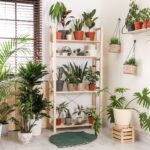
Dedicated indoor plant enthusiasts often move beyond growing a few plants on windowsills or beneath individual grow lights. Some create an entire grow room where they can control lighting, temperature, humidity, watering, and feeding schedules more precisely. Maintaining that controlled environment, however, can become difficult every time the door opens.
The air around indoor plants shifts far more than most people expect. Open a door in winter, and a warm, humid grow room can lose heat in seconds. One way to reduce those sudden changes is to hang anti-static strip curtains across the doorway. Commonly used in warehouses and cold-storage facilities, the clear plastic strips help keep warm, humid air inside while still allowing you to see into the room and walk through carrying potted plants.
How Do Strip Curtains Hold Humidity in a Grow Room?
Strip curtains work as a soft air barrier. Overlapping PVC panels part when you pass and fall closed behind you. That simple action keeps most of your warm, moist air on the plant side. Without it, every trip through the door dumps humid air into the rest of the house.
Most tropical houseplants want humidity of 50 to 70 percent. A dry home often sits closer to 30 percent in winter. The curtain lets you increase humidity in one zone without misting all day. Your humidifier then works less to hold the same reading.
Companies like AKON make clear strip curtains sized for doorways and walk-through openings. A typical 8-inch strip with 50 percent overlap seals well while staying easy to push through. You keep the humid pocket without trapping yourself behind plastic. The barrier is quiet, uses no power, and needs no daily attention.
How Do You Set Up Strip Curtains in a Plant Room?
Setup takes an afternoon and a few basic tools. Most people need only a drill, a level, and a tape measure. Follow these steps for a clean, snug fit.
Measure the opening width and height. Add a few inches on each side for overlap.
Mount a header bracket above the doorway. AKON ships mounting hardware matched to the strip width.
Hang the strips from the center outward. Even spacing stops gaps at the edges.
Check the overlap as you go. Aim for 50 percent so air cannot slip between panels.
Test the swing before you finish. Strips should part easily and fall back flat.
Why Do Indoor Gardens Need Separate Climate Zones?
Not every plant wants the same air. Succulents like it dry, while ferns crave moisture. One open room forces every plant into a single average that suits none of them. A divider lets you run two settings side by side.
Zoning solves this with a physical divider. A strip curtain splits a garage or basement into a warm, humid side and a cooler, drier side. Sealing conditioned air also trims energy waste, which is why air sealing matters for home comfort. A tighter zone also heats or cools faster than a whole room.
Insulated PVC curtains build these zones without framing a wall. You can slide a divider as your collection grows. A cheap hygrometer on each side confirms the split is working. Aim for a gap of at least 10 percent between the two readings.
Which Strip Curtain Type Fits Your Setup?
There are several strip curtain styles available. Match the material to your main goal, then size it to your opening.
Standard clear PVC: Best for holding humidity and temperature. Light passes through, so plants stay bright all day.
Anti-static PVC: Cuts the static cling that pulls dust onto leaves. A smart pick near fans or in dry winter air.
Insulated panels: Thicker material for cold garages and basements. Holds heat when outdoor temps drop below 40 degrees.
Wash-down grade: Wipes clean fast when soil or spray builds up. Handy in busy propagation corners and potting benches. To clean, wipe both sides with a damp cloth and mild soap every few weeks. Wash-down grade PVC shrugs off soil splatter and spray. Avoid harsh solvents that can cloud the plastic over time.
Most growers start with one style and add another as needs change. You can mix panel types across two openings in the same room.
How Do Anti-Static Curtains Cut Dust Around Plants?
Dry indoor air builds static on plain plastic sheeting. That charge pulls dust straight onto nearby leaves. Dusty leaves block light and slow photosynthesis. Over weeks, that thin film can shave real growth off a plant.
Anti-static PVC bleeds off that charge. Leaves stay cleaner, so you wipe them less often. Cleaner air also supports the indoor air quality that plants and people share. Less airborne dust means fewer clogged pores on both leaves and lungs.
Anti-static curtains suit grow tents, greenhouses, and plant rooms alike. They pair well with a small fan for gentle airflow. Fewer dust films mean healthier growth across a full season.
Will PVC Curtains Block Light for My Plants?
Clear PVC passes most visible light, so plants near a window stay bright. For grow-light setups, hang the curtain just outside the light footprint. That keeps intensity high while still sealing the zone.
Climate Control Points Worth Remembering
Strip curtains hold humidity near 50 to 70 percent in one zone.
An overlap of 50 percent seals air while staying walk-through.
Zoning lets dry-loving and moisture-loving plants share a room.
Anti-static PVC keeps dust off leaves and lifts light capture.
AKON offers clear, insulated, and wash-down styles for any space.
Building a Steadier Grow Space
Climate swings stress plants more than a missed watering. A simple curtain in your indoor environment gives you steady air you can count on. Start with one doorway, watch the readings settle, and expand from there. Track humidity and temperature for a week before you judge the result. Your plants repay that stability with greener, more even growth.
Julie Bawden-Davis is a best-selling garden author, blogger, YouTuber and Master Gardener dedicated to sharing indoor gardening expertise with aspiring gardeners. She has published several gardening books and more than 5,000 articles in major publications. A former garden columnist for the LA Times, San Francisco Chronicle and Parade.com, she is founder of HealthyHouseplants.com and its YouTube channel.
 Julie Bawden-DavisAugust 4, 2026