7 Signs Your Houseplant Needs Water
 Julie Bawden-DavisOctober 29, 2026



Houseplants have a frustrating habit of looking perfectly healthy one day and surprisingly miserable the next. A pothos that was standing tall yesterday suddenly has drooping leaves, your peace lily looks as though it has given up entirely, and the soil doesn’t offer any obvious answers. Should you water it immediately, or could adding more moisture make the situation worse?
It’s a common dilemma because houseplants don’t always show clear signs of water stress until their condition has already begun to deteriorate. To complicate matters, underwatering and overwatering can produce remarkably similar symptoms. A plant with drooping leaves might be struggling because its soil is too dry, but it could just as easily be suffering from roots that have remained saturated for too long.
Fortunately, plants often provide subtle clues before serious problems develop. By learning to recognize changes in soil moisture, leaf firmness, and growth patterns, you can make more informed watering decisions without relying on guesswork or a rigid schedule.
When a houseplant’s leaves begin to droop, it’s tempting to assume the plant has suddenly become thirsty. In reality, water stress can develop before visible symptoms appear. Plants rely on water to maintain turgor pressure, which helps keep their leaves and stems firm. As water becomes less available, cells gradually lose pressure, eventually causing leaves to wilt.
Humans have an advantage when it comes to recognizing their need for water: thirst. As Polar Camel explains in its discussion of hydration, thirst is one way the body signals its need for fluids. Plants don’t experience thirst in the same way. Instead, changes in water availability affect their cells and tissues, sometimes producing visible symptoms such as drooping leaves.
However, wilting isn’t always a sign of underwatering. Overwatered plants can wilt, too, because roots that remain in saturated soil may struggle to obtain enough oxygen and eventually lose their ability to absorb water efficiently. That’s why checking the soil is usually more reliable than judging a plant’s watering needs by its leaves alone.
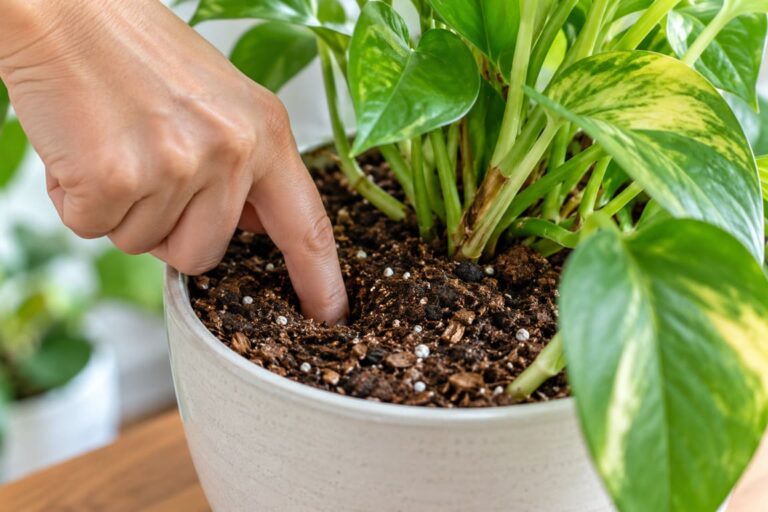
One of the most reliable ways to determine whether a houseplant needs water is to check the soil rather than relying exclusively on its appearance. The surface of potting mix can dry relatively quickly, particularly in a warm room or near a sunny window, while moisture remains several inches below. Watering based only on the surface can therefore lead to adding more water before the roots actually need it.
A simple way to assess moisture is to insert your finger about an inch or two into the soil, or deeper for larger containers. If the soil feels noticeably moist, the plant may not need watering yet. If it feels dry, consider whether that matches the conditions the species prefers. For larger pots, a wooden chopstick or extra-long moisture meter can help you assess moisture deeper in the root zone.
It’s important to remember that different houseplants have different requirements. Peace lilies generally prefer more consistent moisture, while snake plants and ZZ plants are adapted to tolerate substantially drier conditions between waterings. The goal isn’t to keep every container equally moist, but to understand what an appropriate level of moisture looks like for each plant.
The University of Minnesota Extension makes a similar recommendation in its spring houseplant care guidance, emphasizing the importance of checking soil moisture rather than relying exclusively on a calendar. As growing conditions change, so does the rate at which plants use water.
If you’ve ever lifted a freshly watered houseplant and then picked it up again several days later, you may have noticed a significant difference in weight. Water contributes to the overall weight of the potting mix, so as moisture evaporates and is absorbed by the plant, the container gradually becomes lighter. With a little experience, this can become a surprisingly useful way to estimate when a plant is approaching the dry end of its preferred moisture range.
Try lifting a small pot shortly after watering, once the excess water has drained, and pay attention to how heavy it feels. Check it again over the following days as the soil dries. Eventually, you’ll begin recognizing the difference between a container that still holds plenty of moisture and one that may need attention.
Pot weight works best as a secondary indicator rather than a definitive test. Large ceramic containers can be difficult to assess, and different potting mixes retain different amounts of water. Still, when combined with a soil check, this technique can help you become more familiar with your plants’ individual watering patterns.
Healthy leaves often have a characteristic firmness that changes when a plant experiences water stress. Because water helps maintain pressure inside plant cells, declining moisture availability can cause foliage to become softer, less rigid, or noticeably limp, which is a process known as flagging. Depending on the species, these changes may become apparent before the leaves begin dramatically drooping.
For example, a pothos may develop slightly limp foliage as its soil dries, while some succulents show changes in leaf firmness as their stored water becomes depleted. Plants with thin, delicate leaves often respond more quickly to moisture shortages than species with thick, water-storing foliage, which explains why two houseplants sitting next to each other can react very differently to the same conditions.
The important thing is to understand how your plant normally looks and feels. Some species naturally have flexible leaves, so softness alone isn’t evidence of dehydration. However, if foliage that usually feels firm becomes noticeably limp while the soil is dry, the combination may indicate that the plant needs water.
Leaf curling is another possible response to water stress, although its appearance varies considerably among plant species. Some plants develop inward-curling leaves, while others fold or roll their foliage as environmental conditions change. These responses can sometimes accompany declining water availability and may help certain plants reduce water loss by changing how much leaf surface is exposed.
However, curling leaves aren’t necessarily a sign that a plant needs more water. Excessive sunlight, high temperatures, pests, and other environmental stresses can produce similar symptoms, which is why the surrounding conditions matter just as much as the appearance of the foliage.
Before watering, check the soil and consider whether anything has recently changed. A plant moved closer to a bright window may be reacting to increased light or heat, while one sitting in consistently wet soil could be experiencing root problems. If the soil is dry and the plant is showing other signs of moisture stress, underwatering becomes a more plausible explanation.
Brown leaf tips and edges are among the most common concerns for indoor gardeners, and prolonged moisture stress is one possible cause. When a plant struggles to maintain adequate water supply to its tissues, portions of the leaves may become damaged. Once that tissue dies, it often turns brown and develops a dry, crispy texture, particularly along the edges or tips.
Unfortunately, brown foliage isn’t a reliable indicator of underwatering on its own. Low humidity, excess fertilizer, mineral accumulation, and inconsistent watering can all contribute to similar damage. A plant may even develop brown tips while its soil remains moist, especially if other environmental conditions are unfavorable.
Penn State Extension’s guide to diagnosing poor plant health illustrates why symptoms need to be considered together. Problems such as wilting, leaf damage, and leaf loss can have several possible causes, making it important to investigate growing conditions before deciding on a treatment.
Rather than immediately increasing watering frequency, examine the soil and review how the plant has been cared for over the previous several weeks. It’s also worth remembering that damaged leaf tissue won’t turn green again after the underlying problem is corrected. The better measure of improvement is whether healthy foliage continues to develop without additional damage.
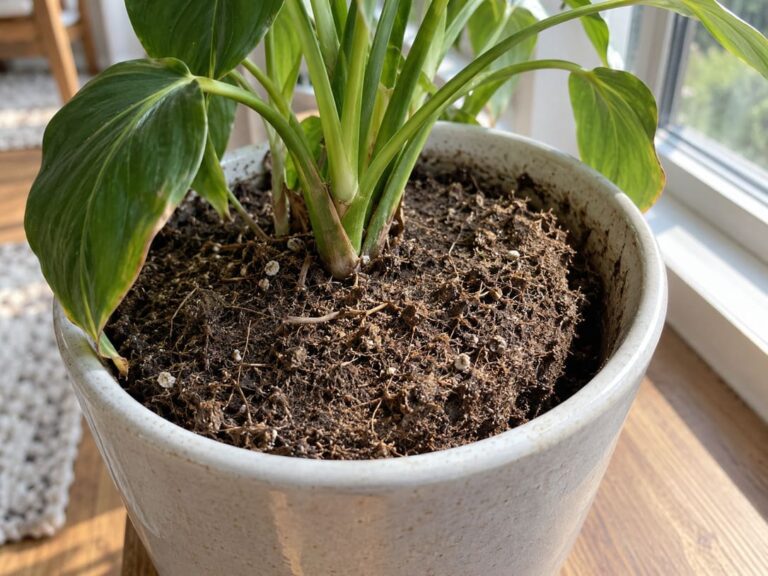
When certain potting mixes become extremely dry, they can shrink and separate from the sides of the container. You may notice a narrow gap between the soil and the pot wall, particularly with peat-based mixes that have dried substantially. This is more than a cosmetic issue because severely dried potting mix can sometimes become difficult to rewet evenly.
When water is poured into a container with a gap around the soil, some of it may run directly down the sides rather than soaking into the root zone. Water can then appear in the drainage tray almost immediately, giving the impression that the plant has received a thorough watering even though much of the potting mix remains dry.
If this happens, try watering slowly in stages, allowing time for the soil to absorb moisture between applications. For smaller plants in containers with drainage holes, bottom watering can sometimes help rehydrate stubbornly dry potting mix. Place the pot in a container of water until the soil becomes saturated. This Healthy Houseplants video shows how to water houseplants from the bottom, including how capillary action draws moisture upward through the potting mix. This technique can be particularly useful when water runs through a container without adequately moistening the soil.
The goal is to restore even moisture throughout the root zone without leaving the plant sitting in water indefinitely. If the potting mix repeatedly becomes difficult to rewet, it may be worth considering whether a different growing medium would be more suitable.
Water plays an essential role in plant growth because it supports photosynthesis, helps transport dissolved nutrients, and provides the internal pressure needed for cells to expand. When water availability becomes limited, plants may reduce growth as they respond to stress. Over time, you might notice fewer new leaves, smaller foliage, or shoots that develop more slowly than expected.
However, slower growth is one of the least specific signs of underwatering. Houseplants naturally respond to changes in light, temperature, and season, so a plant receiving less daylight during winter may grow slowly even when its watering routine is appropriate. Nutrient availability, root health, and the plant’s natural growth cycle also influence how quickly new foliage appears.
For that reason, reduced growth should encourage you to examine the plant’s overall environment rather than automatically increase watering. If the soil has been consistently too dry and other symptoms are present, insufficient moisture may be contributing to the problem. Otherwise, the explanation could be something entirely different.
One of the biggest challenges in houseplant care is that underwatering and overwatering can both cause drooping foliage. The underlying reasons, however, are very different. Underwatered plants may not have enough available moisture in the soil to maintain normal cell pressure, while overwatered plants may struggle because saturated potting mix restricts the oxygen available to their roots.
Roots need oxygen to function properly, and prolonged saturation can damage root tissues and interfere with water absorption. As a result, a plant may appear dehydrated even though its roots are surrounded by wet soil. This is why watering a drooping plant without checking the soil can sometimes make an existing problem worse.
When a plant is underwatered, the soil will often feel dry well below the surface, and the container may be noticeably lighter than usual. Leaves may become limp, thin, or crispy, depending on the species and how long the plant has been without adequate moisture. In more severe cases, the potting mix may shrink away from the sides of the container, making it difficult for water to reach the roots evenly.
When a plant is overwatered, the soil may remain wet for an unusually long time, even while the foliage begins to droop. Leaves may turn yellow or become soft, and damaged roots can develop a brown, mushy appearance. A persistent musty smell from the potting mix can also indicate that conditions around the roots have deteriorated.
The distinction matters because adding water to an already saturated container won’t solve the underlying problem. Instead, it will cause more problems, potentially exacerbating a root rot situation.
If you suspect root damage, check out this detailed explanation of what root rot looks like in houseplants. Recognizing symptoms such as deteriorating roots, unusual odors, and persistent wilting can help you determine whether the problem extends beyond ordinary watering frequency.
Watering every Sunday might sound convenient, but plants don’t use water at a constant rate. Their moisture requirements change with light exposure, temperature, humidity, time of year, and growth activity, meaning a schedule that works during one season may be unsuitable during another.
Consider a pothos growing near a bright window during summer. With more available light and warmer temperatures, it may use water relatively quickly. Move that same plant to a darker location during winter, and its water requirements may decrease considerably. If you continue watering at the same frequency without checking the soil, moisture may accumulate faster than the plant can use it.
Container size and material also influence how quickly potting mix dries. Unglazed terracotta allows moisture to evaporate through its walls, while plastic and glazed ceramic retain moisture differently. Larger pots can also hold moisture for longer periods, particularly when the container contains substantially more soil than the root system needs.
Humidity is another factor worth considering because it affects the movement of water vapor between plants and the surrounding air. The U.S. Geological Survey’s explanation of evapotranspiration describes how water moves from soil and vegetation into the atmosphere through evaporation and transpiration. Although the rate varies with environmental conditions, the underlying process helps explain why plants can dry out more quickly in some environments than others.
Seasonal changes deserve particular attention because indoor environments can shift considerably throughout the year. This winter watering guide explains why cooler conditions and reduced plant growth can make watering decisions more complicated during colder months.
Rather than abandoning schedules entirely, use them as reminders to inspect your plants. Checking soil moisture regularly allows you to respond to actual conditions instead of assuming that every plant needs water simply because a particular day has arrived.
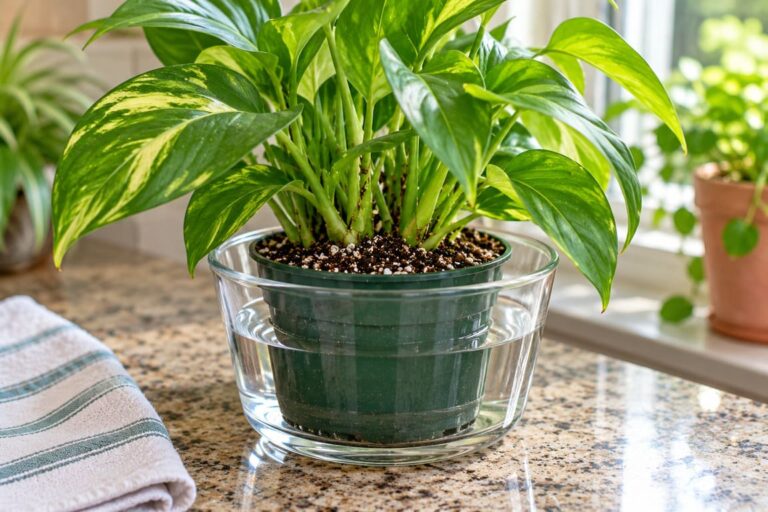
If you’ve confirmed that a plant is suffering from dry soil, the next step is to rehydrate the root zone thoroughly. Begin by making sure the container has drainage holes, then apply water slowly and evenly until excess moisture begins draining from the bottom. If the potting mix is extremely dry, it may be necessary to repeat the process after allowing time for the initial water to absorb.
For soil that has become difficult to rewet, bottom watering can help the container restore more even moisture. Once the root zone has been rehydrated, allow the pot to drain completely rather than leaving it standing in a saucer of water. The objective is to replenish available moisture without creating the saturated conditions that can lead to root problems.
It’s also best to avoid fertilizing immediately after discovering severe water stress. A struggling plant doesn’t need additional nutrients, and applying fertilizer to very dry or damaged roots may create further problems. Instead, restore appropriate moisture, return the plant to suitable growing conditions, and observe how it responds over the following days.
Some houseplants regain their firmness within hours of watering, while others take longer to recover, especially after prolonged stress. Leaves that have suffered extensive damage may never return to their original condition, but healthy new growth can indicate that the plant is recovering.
Preventing serious moisture stress usually begins with understanding the needs of the particular species you’re growing. Some houseplants prefer relatively consistent moisture, while others are adapted to periods of dryness. Learning which category your plant falls into makes it easier to interpret soil conditions and avoid watering simply because the soil surface looks dry.
It also helps to pay attention to how quickly the potting mix dries in your home. Check plants more frequently when temperatures rise, light exposure increases, or indoor conditions become unusually dry. During cooler or darker periods, be prepared for the soil to retain moisture longer than expected.
Appropriate drainage and potting mix are equally important, because watering habits alone can’t compensate for a container that remains saturated. Plants growing in poorly draining soil may develop root problems even when they’re watered relatively infrequently. Conversely, a mix that dries too rapidly may make it difficult to maintain suitable moisture for species that prefer more consistently moist conditions.
Grouping plants with similar watering requirements can make routine care easier, especially if you have a growing collection. Rather than treating every houseplant the same way, you’ll be able to recognize which ones need frequent attention, and which are better left alone until their soil has dried further.
There isn’t a universal rule for how often houseplants should be watered, and that’s part of what makes indoor gardening both challenging and rewarding. A peace lily, a pothos, and a snake plant can all thrive in the same home while requiring noticeably different watering routines. Their needs also change as the seasons shift and their growing conditions evolve.
The most useful habit is learning to recognize how each plant responds to moisture. Dry soil, lighter containers, changes in leaf firmness, and other subtle signals can help you identify when watering may be necessary, but no single symptom should determine your response. Looking at several clues together provides a more reliable picture of what’s happening.
Before reaching for the watering can, take a moment to check the soil and consider the plant’s recent conditions. That small amount of observation can help you prevent both underwatering and overwatering, giving your houseplants a better chance to stay healthy without constantly recovering from their last drink.