About Cape Primrose
Cape Primrose Introduction
Cape Primrose belongs to the genus Streptocarpus, a group of flowering herbaceous plants native to the mountainous forests, rocky outcrops, and stream banks of southern and eastern Africa, with particular concentrations in South Africa, Tanzania, and Madagascar. The genus name derives from the Greek words “streptos” (twisted) and “karpos” (fruit), referencing the distinctive spiraled seed capsules that form after flowering. Cape Primrose is prized by houseplant enthusiasts and collectors for its long-lasting, trumpet-shaped blooms that resemble small African violet flowers, to which it is closely related within the Gesneriaceae family.
The plant typically forms a rosette of long, strap-like, textured leaves that are often slightly hairy or wrinkled, giving the foliage a somewhat rugged, tactile quality. Depending on the species and cultivar, leaves can range from a few inches to over a foot in length, with some unusual species such as Streptocarpus wendlandii producing a single enormous leaf. Most commercially available hybrids, however, are compact rosette-forming plants bred for continuous flowering and manageable size, making them well suited to windowsills and indoor growing.
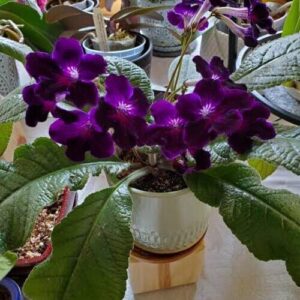
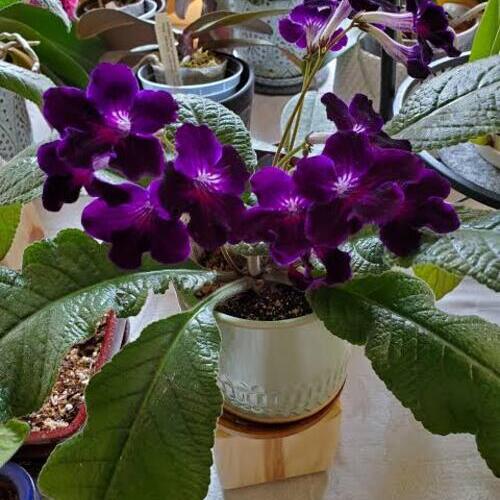
Cape Primrose flowers appear on slender stalks that rise above the foliage, opening in clusters of two to six blooms per stem in shades of purple, blue, pink, red, white, and bicolor combinations, frequently with contrasting throat markings or veining. Under the right conditions, a mature plant can flower nearly continuously from spring through autumn, and with attentive indoor care, even into winter. Its combination of low maintenance, long bloom season, and striking flower form has made it an enduring favorite among gesneriad collectors and casual houseplant growers alike.
Cape Primrose Care & Growing Guide
Cape Primrose is considered a relatively easy houseplant once its core preferences are understood: bright, indirect light, consistently moist but not soggy soil, and moderate humidity. Unlike many flowering houseplants, it does not require a strict dormancy period to rebloom, so with stable conditions it can flower for much of the year. Placing the plant near an east- or north-facing window, or a few feet back from a bright south- or west-facing window, typically provides the light intensity it needs without risking leaf scorch.
Watering is one of the more important aspects of Cape Primrose care. The fleshy, semi-succulent roots are prone to rot if left in waterlogged soil, so the growing medium should be allowed to dry slightly at the surface between waterings while never drying out completely at the root ball. A well-draining, airy potting mix formulated for African violets or gesneriads works well, and pots with drainage holes are essential. Because the plant is a relatively shallow-rooted rosette grower, it prefers a somewhat shallow, wide pot rather than a deep one.
Regular light feeding during the active growing season, removal of spent flower stalks and yellowing leaves, and periodic repotting or division as the rosette grows will keep a Cape Primrose vigorous and floriferous for years. It is not a particularly cold-hardy plant and should be protected from temperatures below about 50°F (10°C), making it best suited as a houseplant or a seasonal outdoor patio plant in temperate climates. With consistent care, Cape Primrose rewards growers with an unusually long and prolific bloom season compared to many other flowering houseplants.
Soil
Cape Primrose grows best in a light, well-aerated, humus-rich potting mix rather than dense garden soil. A blend formulated for African violets or gesneriads, or a homemade mix of roughly equal parts peat-free potting mix (or coco coir), perlite, and vermiculite, provides the porous structure and moisture retention the plant’s fine, fleshy roots need. Ideal soil pH is slightly acidic, in the range of 5.8 to 6.5. Good drainage is critical, since the roots are highly susceptible to rot in compacted or waterlogged conditions; adding extra perlite or coarse sand improves aeration. Soil composition directly affects growth and flowering: overly dense or moisture-retentive mixes lead to root suffocation and rot, while overly fast-draining mixes cause the plant to dry out and stress between waterings, reducing bloom production. Common soil problems include poor drainage from compacted or peat-heavy mixes, compaction over time as organic matter breaks down, inappropriate pH causing nutrient lockout, salt build-up from over-fertilizing (visible as a white crust on the soil surface or pot rim), nutrient deficiencies in old, depleted potting mix, and root-boundness in plants left too long in the same small pot, which shows as roots circling the pot’s interior or emerging from drainage holes.
Fertilizer
Feed Cape Primrose every two to four weeks during the active growing season (spring through early autumn) with a balanced, water-soluble fertilizer diluted to half strength, or a bloom-boosting formula higher in phosphorus to support flower production. Reduce or pause feeding in winter when growth naturally slows. Signs of over-fertilization include a white, crusty salt build-up on the soil surface, brown leaf-tip burn, and stunted, distorted new growth; signs of under-fertilization include pale, yellowing leaves and sparse or stalled flowering. Organic alternatives such as diluted fish emulsion, compost tea, or worm-casting tea can be used in place of synthetic fertilizer, applied at a similarly diluted, gentle strength. Cape Primrose has no unusually specific nutrient requirements beyond standard flowering-houseplant needs, though it benefits from occasional flushing of the soil with plain water to prevent salt accumulation from regular feeding.
Watering
Water Cape Primrose thoroughly when the top half-inch to one inch of soil feels dry to the touch, allowing excess water to drain freely from the pot and never letting the plant sit in standing water. Room-temperature, distilled, filtered, or rainwater is preferable to hard tap water, since Cape Primrose can be sensitive to the chlorine, fluoride, and mineral salts commonly found in tap water, which may cause leaf-tip browning over time. Signs of underwatering include wilting, limp leaves and dry, curling leaf edges, while overwatering presents as yellowing lower leaves, soft or mushy stem bases, and a sour smell from the soil indicating root rot. Watering needs increase somewhat during the active spring-to-fall growing season when the plant is flowering and using more water, and should be reduced modestly in winter when growth slows, though the soil should still never be allowed to fully dry out for extended periods.
Cape Primrose Watering Calculator
🪴 Precision Watering Intelligence
Science-Based Hydration for Your Collection
Stop guessing. Most houseplant failures are caused by volumetric errors and improper moisture tension. Our deterministic calculator moves beyond "once-a-week" watering by analyzing the four critical pillars of root health:
- • Transpiration Coefficients: 120+ species mapped by metabolic rate.
- • Substrate Porosity: Adjusts for Standard vs. Cactus/Well-Draining mixes.
- • Geometric Volume (V = π r² h): Calculates exact cups based on pot surface area.
- • The Drainage Factor: Accounts for pot material (Terracotta) and the risk of a perched water table.
Personalized for this plant
Disclaimer: Our calculator is pretty smart. We’ve crunched the numbers, but we’re not measuring the quantum state of your living room. Since we don’t know your exact indoor temperature, humidity, light, airflow, or whether your plant receives daily sweet nothings and motivational speeches, use this calculator as a guide—and always keep an eye on your plant.
Lighting
Cape Primrose prefers bright, indirect light and does best near an east- or north-facing window, or set back a few feet from a bright south- or west-facing window where direct sun is filtered. Roughly 12-14 hours of bright, indirect light per day encourages the strongest bloom production. Insufficient light causes leggy, stretched growth, pale or dark green leaves with no flowers, and a general lack of vigor. Excessive or direct sun exposure causes bleached, scorched, or crispy brown patches on the leaves, especially on the thin-textured foliage of hybrid cultivars. If natural light is inadequate, growers can supplement with a full-spectrum LED or fluorescent grow light positioned 12-18 inches above the plant for 12-14 hours daily, which reliably sustains healthy growth and flowering even in low-light rooms.
Temperature
Cape Primrose thrives in daytime temperatures between 65-75°F (18-24°C) and slightly cooler nights around 60-65°F (15-18°C), which closely mimics its native montane habitat. The plant tolerates brief fluctuations within this range well but is sensitive to temperatures below 50°F (10°C), which can cause chilling damage, and sustained heat above 85°F (29°C), which can stress the plant and reduce flowering. It should be kept away from cold drafts, single-pane windows in winter, and heating or air-conditioning vents. Outdoors, Cape Primrose should only be grown seasonally in shaded, protected spots and brought indoors well before the first frost, as it has essentially no frost tolerance.
Humidity
Cape Primrose prefers moderate to high humidity, ideally in the range of 50-60%, reflecting its native habitat in humid African forest understories. In low-humidity indoor environments, particularly during winter heating season, leaves may develop dry, browning edges or fail to open flower buds fully. Excessively high humidity combined with poor air circulation can encourage fungal issues such as powdery mildew or botrytis on the leaves and flowers. Effective humidifying methods include placing the pot on a pebble tray filled with water (keeping the pot base above the waterline), grouping plants together to create a humid microclimate, or running a room humidifier nearby; misting the leaves directly is less effective and can promote fungal spotting on the fuzzy foliage, so it is generally not recommended for this species.
Propagation
Cape Primrose can be propagated by leaf cuttings, division, or seed, with leaf cuttings being the most popular and reliable method for home growers. Step-by-step leaf cutting method: 1. Select a healthy, mature leaf from the plant. 2. Using a clean, sharp blade, cut the leaf into horizontal sections about 1-2 inches wide, removing the leaf midrib from each section. 3. Allow the cut edges to callus for a few hours in open air. 4. Insert each leaf section, cut-side down, about a half-inch into a moist, well-draining propagation mix (perlite and vermiculite work well). 5. Cover the tray or pot with plastic wrap or a humidity dome to maintain high humidity. 6. Place in bright, indirect light and keep the mix consistently moist but not soggy. 7. Small plantlets typically emerge along the cut edge of the leaf section within 4-8 weeks. 8. Once plantlets have several true leaves and their own root systems, separate and pot them individually. Division of an established rosette clump is faster and has a very high success rate, simply requiring the grower to separate rooted offsets at repotting time. Seed propagation is possible but slower and less predictable for home growers, mainly used by breeders. Late spring through summer is the best time to propagate, taking advantage of warm temperatures and long daylight hours; leaf cuttings generally take two to four months to become established, actively growing plants, while divisions can resume normal growth within a few weeks.
Potting
Cape Primrose grows best in a shallow, wide pot rather than a deep one, since its root system is relatively shallow, and the pot should have ample drainage holes. Terracotta or plastic pots both work well, though terracotta dries faster and may require more frequent watering. A well-draining, humus-rich, gesneriad-formulated potting mix is ideal. Repot approximately once a year, or every 12-18 months, ideally in spring as new growth begins. Signs that repotting is needed include roots visibly circling the pot or emerging from drainage holes, water running through the pot too quickly without being absorbed, and a rosette that has outgrown its container’s proportions. When repotting, gently loosen the root ball, trim away any mushy, blackened, or excessively long circling roots, and place the plant into a pot only slightly larger than the previous one, as Cape Primrose tends to flower better when slightly pot-bound rather than given a container that is too large. Minimize transplant stress by watering the plant a day before repotting, working quickly to limit root exposure to air, and keeping the newly repotted plant in bright, indirect light with stable humidity for one to two weeks afterward.
Pruning
When to Prune Cape Primrose
Pruning is best done throughout the active growing season, as needed, whenever spent flower stalks or damaged leaves appear. Light, ongoing maintenance is more effective than a single seasonal pruning session.
Purpose of Pruning
Regular pruning removes spent blooms to redirect the plant’s energy into new flower production, eliminates damaged or yellowing foliage to improve appearance and airflow, and helps maintain a tidy, compact rosette shape.
Tools and Preparation
Use a clean, sharp pair of micro-snips or small scissors. Wipe the blades with rubbing alcohol before and between cuts, especially when moving between plants, to prevent the spread of fungal or bacterial pathogens.
Step-by-Step Pruning Guide
- Inspect the plant regularly for spent flower stalks, yellowing leaves, or any damaged foliage.
- Using clean snips, cut spent flower stalks down to their base near the crown of the rosette once all flowers on that stalk have faded.
- Remove yellowing, damaged, or diseased leaves by cutting them off close to the base rather than tearing them, which can damage the crown.
- Thin overcrowded inner leaves occasionally to improve air circulation and light penetration to the plant’s center.
- Dispose of all removed plant material rather than composting if any disease or pest symptoms were present.
Aftercare
After pruning, keep the plant in its normal bright, indirect light location and maintain consistent watering. No special aftercare products are typically needed for routine maintenance pruning.
Special Considerations
Avoid removing more than about a third of the foliage at one time, and always use clean tools to prevent introducing infection through cut surfaces.
Blooming
Cape Primrose typically blooms from mid-spring through late autumn, and can flower nearly year-round indoors under stable bright light and warm temperatures. Individual flowers last one to two weeks, and a healthy plant continuously produces new flower stalks, so bloom clusters overlap for a sustained, near-continuous flowering display. Optimal blooming occurs with bright indirect light, daytime temperatures between 65-75°F (18-24°C), consistent moisture, and regular light feeding with a phosphorus-rich fertilizer. Flowers are trumpet- or funnel-shaped, roughly 1-2 inches across, produced in clusters of two to six atop slender stalks that rise above the foliage, in colors including purple, violet, blue, pink, red, and white, frequently patterned with contrasting veins or a darker throat.
Pests and Diseases
Pests
Name: Mealybugs
Symptoms: Small, white, cottony clusters in leaf axils and along stems; sticky honeydew residue; yellowing or distorted leaves.
Treatment: Isolate the affected plant, dab visible mealybugs with a cotton swab dipped in rubbing alcohol, and treat with insecticidal soap or neem oil, repeating every 7-10 days until the infestation clears.
Name: Aphids
Symptoms: Clusters of small green, black, or brown insects on new growth and flower buds; distorted or curled new leaves; sticky honeydew and sooty mold.
Treatment: Rinse the plant with a gentle stream of water to dislodge aphids, then apply insecticidal soap or neem oil weekly until they are gone.
Name: Spider mites
Symptoms: Fine webbing on the undersides of leaves and between leaf stalks; stippled, dull, or bronzed leaf surfaces; leaves that dry out and drop.
Treatment: Increase humidity, isolate the plant, wipe down leaves, and treat with insecticidal soap or a miticide, repeating applications every 5-7 days for several cycles.
Name: Fungus gnats
Symptoms: Small flying insects around the soil surface; larvae feeding on roots, leading to weak or wilting growth in severe cases.
Treatment: Allow the soil surface to dry out more between waterings, use yellow sticky traps to catch adults, and apply a Bacillus thuringiensis israelensis (BTI) soil drench for larvae.
Diseases
Name: Root rot
Symptoms: Wilting despite moist soil, yellowing lower leaves, soft or mushy stem base, and a sour odor from the soil.
Treatment: Remove the plant from its pot, trim away all blackened or mushy roots, repot into fresh, well-draining mix, and reduce watering frequency going forward.
Name: Powdery mildew
Symptoms: White, powdery patches on leaves and stems, most common in high humidity with poor air circulation.
Treatment: Improve air circulation, avoid wetting foliage when watering, remove affected leaves, and apply a fungicide labeled for powdery mildew if the problem persists.
Name: Botrytis (gray mold)
Symptoms: Fuzzy gray mold on flowers, buds, or damaged leaf tissue, particularly in cool, humid, stagnant conditions.
Treatment: Remove and discard affected plant parts immediately, improve airflow around the plant, avoid overhead watering, and apply a fungicide if the outbreak spreads.
Name: Bacterial leaf spot
Symptoms: Water-soaked or brown spots on leaves, sometimes with a yellow halo, that can enlarge and merge over time.
Treatment: Remove affected leaves, avoid wetting foliage during watering, isolate the plant, and improve air circulation; severe cases may require a copper-based bactericide.
Special Features
Cape Primrose is valued for its unusually long and prolific bloom season compared to most flowering houseplants, often producing waves of trumpet-shaped flowers from spring through autumn and sometimes year-round indoors under stable conditions. Its compact rosette habit and manageable size make it well suited to windowsills, plant shelves, and small indoor spaces, while its wide range of flower colors and patterns, including bicolor and veined varieties, has made it a favorite among gesneriad hobbyists and collectors seeking to build varied collections. Some species also display architecturally distinctive, oversized single leaves, adding unusual textural interest beyond the typical rosette form.
Plant Benefits
Cape Primrose does not have significant documented herbal, medicinal, or pharmaceutical uses in traditional or modern practice; its primary value lies in ornamental and horticultural contexts rather than any therapeutic application.
Additional Information
Cape Primrose belongs to the same family, Gesneriaceae, as African violets, and the two share broadly similar care needs, which makes Streptocarpus a natural next plant for growers who already enjoy African violets. Breeders have developed thousands of named cultivars and hybrids, so plants sold simply as “Streptocarpus” or “Cape Primrose” at nurseries are almost always hybrid selections rather than a single wild species.
Life Cycle
Cape Primrose is a herbaceous perennial that grows from a basal rosette of leaves rather than from a bulb, corm, or woody structure. In cultivation, a young plant (from a leaf cutting, division, or seed) establishes its root system and rosette over several months before producing its first flower stalks, typically within its first year. Once mature, the plant follows a repeating cycle of vegetative leaf growth and flowering flushes through the warmer months, with growth slowing but not fully stopping during cooler, lower-light winter periods. Individual leaves and flower stalks age and die back over time and are replaced by new growth from the crown, while the rosette itself can persist and be maintained for many years with periodic division and repotting.
Are Cape Primrose Poisonous, Toxic
Cape Primrose is generally regarded as non-toxic to cats, dogs, and humans according to the ASPCA’s listing for Streptocarpus. No part of the plant (leaves, stems, flowers) is known to contain compounds that cause systemic poisoning in common household pets. Mild gastrointestinal upset, such as drooling, mild vomiting, or soft stool, can occasionally occur in pets or young children if plant material is chewed or ingested in quantity, most likely due to mechanical irritation from the fibrous, hairy leaf texture rather than any toxic compound. Severity, if any reaction occurs, is typically mild and self-limiting. First aid steps include removing any remaining plant material from the mouth, offering fresh water, and monitoring for continued vomiting, diarrhea, or lethargy; a veterinarian or pediatrician should be contacted if symptoms persist beyond 24 hours or worsen. As a preventive measure, it is still wise to keep any houseplant out of easy reach of pets and small children and to discourage chewing on foliage, since individual sensitivities can vary and soil or fertilizer residue could cause irritation.
Frequently Asked Questions
How often should I water a Cape Primrose?
Water when the top half-inch to one inch of soil feels dry, ensuring the pot drains fully and never sits in standing water.
Is Cape Primrose safe for cats and dogs?
Yes, Cape Primrose is generally considered non-toxic to cats and dogs, though ingesting large amounts could cause mild stomach upset.
How much light does Cape Primrose need?
It prefers bright, indirect light, such as an east- or north-facing window, and can suffer leaf scorch in direct midday sun.
Why is my Cape Primrose not blooming?
Lack of blooming is usually due to insufficient light, irregular watering, or a need for feeding; increasing bright indirect light and regular light fertilizing often restores flowering.
How do I propagate Cape Primrose?
The most common method is leaf cuttings: sectioning a mature leaf and rooting the pieces in moist, well-draining mix under high humidity until plantlets form.
What soil is best for Cape Primrose?
A light, well-draining, humus-rich mix formulated for African violets or gesneriads, with a slightly acidic pH between 5.8 and 6.5, works best.
How often should I repot Cape Primrose?
Repot approximately once a year, ideally in spring, or when roots are visibly circling the pot or growth outpaces the container.
Why are the leaves of my Cape Primrose turning yellow?
Yellowing leaves are most often caused by overwatering and root stress, though natural aging of older lower leaves can also be a normal cause.
What humidity level does Cape Primrose prefer?
It prefers moderate to high humidity around 50-60%, which can be increased using a pebble tray or nearby humidifier.
What temperature range is ideal for Cape Primrose?
Daytime temperatures of 65-75°F (18-24°C) with slightly cooler nights are ideal, and the plant should be protected from temperatures below 50°F (10°C).
Can I grow Cape Primrose in my indoor space
Difficulty: Intermediate
Size: Small
Light: Medium
Water: Medium
Flowering: Yes
Pet Safe: Yes
Air Purifier: Low
Streptocarpus spp. botanical details
Common Name: Cape Primrose
Other Common Names: Streptocarpus, Cape Primrose Violet, Nodding Violet
Botanical Name: Streptocarpus spp.
Native Area: Southern and eastern Africa, particularly South Africa (including the Cape Provinces), Tanzania, and Madagascar, typically found growing in shaded, humid forest understories, on moss-covered rocks, and along stream banks at moderate to high elevations.
Family Name: Gesneriaceae
Plant Type: Herbaceous perennial
Genus: Streptocarpus
Kingdom: Plantae
Photo Gallery
My Cape Primrose Plant Care Recommendations
- Perky Plant fertilizer: https://amzn.to/3RdLA00
- Seaweed extract: https://amzn.to/3z2CsFh
- Rooting hormone: https://amzn.to/3bIXi0t
- Espoma fertilizer: https://amzn.to/3vPa9bs
- Worm compost: https://amzn.to/3HVL01u
- Full-spectrum Light Bulb-Large: https://amzn.to/3yR6VBu
- Full-spectrum Lighting: https://amzn.to/3qhhaiv
- Light meter: https://amzn.to/4dpmp3s
- Moisture meter: https://amzn.to/3TEUu5N
- Hygrometer: https://amzn.to/3Cf6h2F
- Pruning shears: https://amzn.to/3X6oOcg
- ProMix Potting Soil: https://amzn.to/3iVIrjE
- My Organic Green Gourmet Houseplant Fertilizer: Healthy Houseplants Store
- My Perfect Pumice: Healthy Houseplants Store
- My Healthy Houseplants Store: All Products
Buy Cape Primrose Online
✅ “Bring Home This Beauty Today”
✅ “Get Your Own Cape Primrose Before It’s Gone”
✅ “Shop Trusted Sellers – Limited Availability”
✅ “Free Delivery”
As an Amazon Associate, I earn commission from qualifying purchases.
Plant Puns and Jokes
Why did the Cape Primrose refuse to gossip? Because it didn’t want to spread any leaf-lies about its neighbors in the pot!