About Guppy Plant

Guppy Plant Introduction

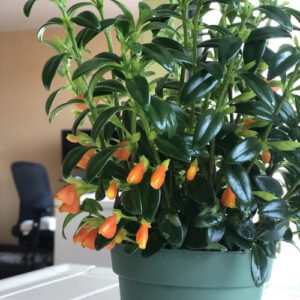
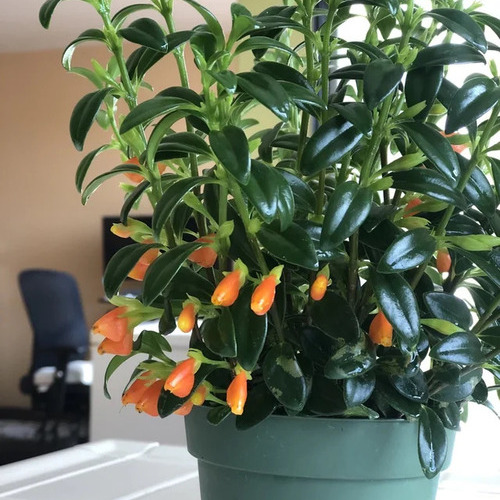
The Guppy Plant, also widely known as the Clog Plant or Goldfish Plant, belongs to the genus Nematanthus within the Gesneriaceae family, which also includes African violets and Cape primroses. The genus name comes from the Greek words “nema” (thread) and “anthos” (flower), a nod to the slender flower stalks that hold the blooms away from the foliage. In its native range across the coastal rainforests of Brazil, and to a lesser extent other parts of tropical South America, this plant grows as an epiphyte or lithophyte, clinging to tree bark and rock faces in warm, humid, dappled-light environments rather than rooting directly in soil.

The plant’s defining feature is its small, pouch-shaped or clog-shaped flowers, which flare out at the mouth and taper to a swollen base, resembling either a tiny wooden clog or a leaping orange guppy fish, depending on which common name took hold in a given region. Blooms typically appear in shades of orange, red, yellow, or bicolor combinations and are held just above a dense mat of small, glossy, dark green leaves that are often slightly succulent to the touch, an adaptation that helps the plant store moisture during dry spells in its epiphytic habitat.

Growth habit is trailing to semi-trailing, with wiry stems that can reach one to three feet in length, making the Guppy Plant a popular choice for hanging baskets, elevated shelves, and mixed epiphyte displays where its cascading stems and long bloom season can be fully appreciated. Under the right conditions it can flower nearly year-round, though bloom production is heaviest from late spring through fall. Because it evolved to grow on other plants rather than in deep soil, it is naturally suited to shallow pots, bark-based mixes, and the kind of bright, humid, warm conditions typical of a well-lit bathroom or kitchen.

Guppy Plant Care & Growing Guide

Caring for a Guppy Plant means recreating the light dappled, humid, warm conditions of a Brazilian rainforest canopy. Bright, indirect light is the single most important factor for good flowering; an east- or west-facing window, or a spot a few feet back from a south-facing window, tends to work well. Too little light produces a leggy plant with few or no flowers, while direct hot sun can scorch the somewhat fleshy leaves.

Watering should follow a soak-and-dry rhythm rather than a fixed schedule. Because the plant’s roots evolved to absorb moisture quickly and then dry out between rain events, it is more tolerant of brief dryness than of waterlogged soil. Allow the top inch of the growing medium to dry before watering thoroughly, and always use a pot and mix that drain freely. Humidity above 50 percent, warm temperatures between 65 and 80°F (18-27°C), and a light monthly feeding during the growing season round out the plant’s core needs.

Beyond the basics, a Guppy Plant benefits from occasional light pruning to keep growth bushy and encourage new flowering wood, a shallow, well-draining pot sized only slightly larger than its root mass, and a short winter rest with reduced water and no fertilizer to mimic the seasonal slowdown it would experience in the wild. Given consistent warmth, humidity, and bright indirect light, this is a rewarding, relatively low-maintenance flowering houseplant that rewards attentive owners with near-continuous blooms.

 Soil Soil

Because Nematanthus grows naturally as an epiphyte or lithophyte, it does best in a light, chunky, fast-draining medium rather than dense potting soil. A mix of standard peat- or coir-based potting mix combined with perlite, orchid bark, and a little coarse sand mimics the airy conditions of its native bark and rock surfaces. A slightly acidic pH of about 6.0 to 6.5 is ideal. Good drainage is essential, since the plant’s fine roots are adapted to absorb moisture quickly and then dry, and prolonged wet conditions quickly lead to root rot. Common soil problems include poor drainage from overly dense, water-retentive mixes; compaction over time as organic matter breaks down, which reduces airflow to the roots; inappropriate pH that locks out nutrient uptake; salt build-up from tap water or over-fertilizing, visible as a white crust on the soil surface; nutrient deficiencies from old, depleted potting mix; and root-boundness in a plant left too long in the same pot, which shows up as roots circling the container or emerging from drainage holes. Refreshing or amending the mix every one to two years helps maintain the open, well-aerated structure this species needs to thrive.

 Fertilizer Fertilizer

Feed with a balanced, water-soluble houseplant fertilizer diluted to half strength every two to four weeks during the active spring-through-fall growing season, switching to a bloom-boosting formula slightly higher in phosphorus once buds begin forming to support flower production. Suspend feeding in winter while growth is slow. Signs of over-fertilizing include a white crust on the soil surface, browned or crispy leaf tips, and stunted or burned new growth, while under-fertilized plants tend to show pale, small leaves and reduced flowering. Organic alternatives such as diluted fish emulsion, worm castings, or compost tea can substitute for synthetic fertilizer and tend to reduce the risk of salt build-up. This species has no unusual nutrient requirements beyond standard houseplant feeding, though it does benefit from occasional micronutrient supplementation if grown long-term in the same bark-based mix.

 Watering Watering

Water thoroughly when the top inch of the growing medium has dried out, then allow excess water to drain completely; the plant prefers a soak-and-dry rhythm over constantly moist soil. Room-temperature filtered, rain, or distilled water is preferable to heavily chlorinated or softened tap water, since the fine roots can be sensitive to mineral and salt build-up. Underwatering shows up as wilting, dry and curling leaf margins, and premature leaf drop, while overwatering leads to yellowing leaves, soft or mushy stems, and eventually root rot if the medium stays soggy. During the active spring-through-fall growing season, watering is typically needed every five to seven days depending on light and humidity, while in winter, when growth slows, the interval should stretch to every ten days to two weeks, with the plant allowed to dry out a bit more between waterings.

Guppy Plant Watering Calculator

🪴 Precision Watering Intelligence

Science-Based Hydration for Your Collection

Stop guessing. Most houseplant failures are caused by volumetric errors and improper moisture tension. Our deterministic calculator moves beyond "once-a-week" watering by analyzing the four critical pillars of root health:

  • • Transpiration Coefficients: 120+ species mapped by metabolic rate.
  • • Substrate Porosity: Adjusts for Standard vs. Cactus/Well-Draining mixes.
  • • Geometric Volume (V = π r² h): Calculates exact cups based on pot surface area.
  • • The Drainage Factor: Accounts for pot material (Terracotta) and the risk of a perched water table.

Personalized for this plant

6"
🪴
--
approx. every --

Disclaimer: Our calculator is pretty smart. We’ve crunched the numbers, but we’re not measuring the quantum state of your living room. Since we don’t know your exact indoor temperature, humidity, light, airflow, or whether your plant receives daily sweet nothings and motivational speeches, use this calculator as a guide—and always keep an eye on your plant.

 Lighting Lighting

Bright, indirect light is ideal, replicating the dappled canopy light of its rainforest habitat. An east-facing window, a lightly filtered south- or west-facing window, or placement a few feet back from stronger direct sun all work well. Insufficient light causes leggy, sparse stems, dull leaf color, and few or no flowers, since bud formation is strongly light-dependent. Excessive direct sun, especially through unfiltered south or west glass in summer, can scorch the somewhat succulent leaves, producing bleached or brown patches. If natural light is too low, a full-spectrum grow light positioned 12 to 18 inches above the plant for 10 to 12 hours a day is an effective supplement; if light is too intense, a sheer curtain or moving the plant a foot or two farther from the glass usually resolves scorch issues.

 Tempature Temperature

Average warm household temperatures of 65 to 80°F (18-27°C) suit the Guppy Plant well, and it appreciates relatively stable conditions without cold drafts. It is sensitive to cold; temperatures below about 55°F (13°C) can cause leaf drop and stunted growth, and any exposure to frost is fatal. It also does not tolerate sudden temperature swings well, so keep it away from air-conditioning vents, drafty windows, and exterior doors in winter. A brief cooler rest period around 60-65°F in winter, paired with reduced watering, can actually help encourage strong flowering the following season, but this should be a gentle dip rather than a cold shock.

 Humidity Humidity

The Guppy Plant prefers relatively high humidity, ideally 50 percent or above, consistent with its rainforest origins. Low humidity stress shows up as crispy or browning leaf edges, bud drop before flowers open, and a generally dull, tired appearance, while excessively high humidity combined with poor air circulation can encourage fungal issues like botrytis on flowers and leaves. Effective ways to raise humidity include grouping plants together, running a small room humidifier nearby (generally the most consistent and effective method), or setting the pot on a pebble tray filled with water so evaporation raises local humidity without waterlogging the roots. Misting offers only a brief humidity boost and is less effective long-term, and can even encourage leaf spot if water sits on foliage in low light or poor airflow, so it is best used sparingly if at all.

 ropagation Propagation

Stem tip cuttings are by far the most reliable and popular way to propagate a Guppy Plant, generally outperforming other methods in both speed and success rate; division is possible for mature, multi-stemmed specimens but is used far less often since it disturbs the shallow root system. Late spring through summer, during active growth, is the best time to take cuttings, and new roots typically form within two to four weeks, with a usable young plant ready to pot on its own in about two to three months.

1. Select a healthy, non-flowering stem tip about three to four inches long.
2. Using clean, sharp scissors or shears, cut just below a leaf node.
3. Remove the lower one or two sets of leaves to expose the node.
4. Optionally dip the cut end in rooting hormone to speed root formation.
5. Insert the cutting into a moist, well-draining mix of perlite and peat or into water.
6. Place in bright, indirect light with high humidity, using a loose plastic cover or bag if rooting in a mix.
7. Keep the medium consistently moist but not soggy while roots develop.
8. Check for root resistance after two to three weeks by gently tugging the cutting.
9. Once roots are an inch or more long, transplant into a small pot with standard Guppy Plant mix.
10. Pinch the growing tip after a few weeks of new growth to encourage a bushier habit.

 Potting Potting

Choose a shallow, wide pot with generous drainage holes, since this epiphytic plant’s roots are adapted to spread out rather than grow deep. Terracotta is a good option because it wicks away excess moisture. Use a loose, well-aerated mix of potting soil, perlite, and orchid bark. Repotting is generally needed every one to two years, or when roots begin circling the pot, emerging from drainage holes, or the plant dries out unusually fast after watering, all signs of being root-bound. When repotting, gently loosen the root ball, trim away any mushy, blackened, or excessively long circling roots with clean shears, and move up only one pot size to avoid leaving excess unused soil that stays wet too long. Water lightly after repotting and keep the plant out of direct sun for a week or two to reduce transplant stress.

 Pruning Pruning

Best Time to Prune

Late winter to early spring, just before the main growth flush begins, is the ideal time for structural pruning, though light tip-pinching can be done throughout the growing season.

Frequency and Purpose

Prune lightly every few months to encourage branching, and do a more thorough shaping cut once a year. Regular pruning keeps growth compact, prevents legginess, and stimulates the new stem tips that produce the most flowers.

Tools and Preparation

Use clean, sharp micro-snips or precision pruning shears wiped with rubbing alcohol before and after use to prevent spreading disease. Water the plant a day before pruning so it is well hydrated.

Step-by-Step Pruning Guide

  1. Inspect the plant and identify leggy, bare, or overly long trailing stems.
  2. Sterilize your cutting tool with rubbing alcohol.
  3. Cut stems back by about one-third, just above a leaf node.
  4. Remove any dead, yellowing, or damaged foliage at its base.
  5. Pinch soft new growth tips on younger stems to encourage branching.
  6. Save healthy cuttings for propagation if desired.
  7. Dispose of diseased or pest-affected material rather than composting it.

Aftercare

Keep the freshly pruned plant in bright, indirect light and maintain normal watering; avoid heavy fertilizing for a week or two while it recovers.

Special Considerations

Avoid pruning heavily while the plant is in full bloom, since this removes developing flower buds; instead, time major cuts for right after a bloom flush or before the spring growth surge.

 Blooming Blooming

The Guppy Plant can flower nearly year-round indoors when conditions are favorable, but blooming is heaviest from late spring through early fall, tapering off in winter as light levels drop. Individual pouch-shaped flowers are small (about half an inch to one inch long) but are produced in flushes along the leaf axils, so a healthy plant is rarely without at least a few open blooms during the active season. Optimal blooming is encouraged by bright indirect light, consistent warmth (65-80°F), moderate feeding with a phosphorus-leaning fertilizer, and a brief cooler, drier winter rest period that helps trigger the next flush of buds.

 Pests & Diseases Pests and Diseases

Pests

Name: Mealybugs

Symptoms: Small cottony white clusters in leaf axils and along stems, sticky honeydew residue, and general plant decline.

Treatment: Dab visible insects with a cotton swab dipped in rubbing alcohol, then treat the whole plant with insecticidal soap or neem oil weekly until clear.

Name: Spider mites

Symptoms: Fine speckled stippling on leaves, faint webbing between stems, and a dry, dusty appearance, especially in low humidity.

Treatment: Increase humidity, rinse foliage under lukewarm water, and apply insecticidal soap or neem oil, repeating every five to seven days for two to three treatments.

Name: Aphids

Symptoms: Clusters of small soft-bodied insects on new growth and flower buds, curled or distorted leaves, sticky honeydew.

Treatment: Spray off with a strong stream of water, then apply insecticidal soap, focusing on new growth where aphids concentrate.

Name: Thrips

Symptoms: Silvery streaks or scarring on leaves and flowers, distorted or discolored blooms.

Treatment: Isolate the plant, remove heavily affected flowers and leaves, and treat with insecticidal soap or a spinosad-based product.

Diseases

Name: Root rot

Symptoms: Wilting despite moist soil, yellowing leaves, mushy blackened roots, and a foul smell from the soil.

Treatment: Remove the plant from its pot, trim away all affected roots, repot into fresh, well-draining mix, and reduce watering frequency going forward.

Name: Botrytis (gray mold)

Symptoms: Fuzzy gray mold on flowers or leaves, usually in cool, damp, poorly ventilated conditions.

Treatment: Remove and discard affected plant parts, improve air circulation, avoid overhead watering, and apply a fungicide labeled for botrytis if the problem persists.

Name: Leaf spot

Symptoms: Brown or black spots on foliage, sometimes with a yellow halo, often from water sitting on leaves.

Treatment: Remove affected leaves, avoid wetting foliage when watering, and improve airflow around the plant.

 Special Features Special Features

The Guppy Plant’s most memorable feature is its unusual pouch-shaped flowers, which have earned it a whole family of playful common names, from Guppy and Goldfish Plant to Clog Plant and Candy Corn Plant, depending on whether the flared, swollen bloom reminds the observer of a leaping fish or a tiny wooden shoe. Its glossy, slightly succulent foliage stays attractive year-round even between bloom flushes, and its naturally trailing habit makes it a striking choice for hanging baskets, macrame planters, and elevated shelves where the cascading stems can be shown off. Unlike many flowering houseplants, it can bloom on and off for most of the year with consistent warmth and light, and because it is pet-safe, it suits households with curious cats and dogs. Its epiphytic origins also make it a fun addition to mixed epiphyte or terrarium-style displays alongside orchids and tillandsias.

 Benefits Plant Benefits

The Guppy Plant is not documented as having established herbal, medicinal, or pharmaceutical uses; there is no significant body of ethnobotanical or clinical research indicating therapeutic compounds in Nematanthus species. Its primary value is ornamental and psychological, contributing to interior greenery and the well-documented mood and air-quality benefits associated with houseplant care in general, rather than any specific medicinal application.

  Additional Information Additional Information

The Guppy Plant is closely related to Columnea species, which share the common name Goldfish Plant and similar pouch-shaped flowers, leading to frequent confusion between the two genera in nursery labeling. Most plants sold under the Goldfish or Guppy Plant name in North American and European garden centers are Nematanthus gregarius, prized for its especially reliable indoor flowering compared to its Columnea cousins.

  Lifecycle Life Cycle

As an evergreen perennial subshrub, the Guppy Plant does not die back seasonally but instead cycles through periods of active growth and flowering (spring through fall) followed by a slower semi-dormant rest in winter when light and temperatures drop. Stems lengthen and branch during the growing season, flowering along new and semi-mature growth, while older, leggy stems benefit from periodic pruning to keep the plant productive over many years. Given consistent care, a single specimen can live and bloom for well over a decade, making it more of a long-term trailing houseplant than a short-lived seasonal bloomer.

  Plant ToxicityAre Guppy Plant Poisonous, Toxic

The ASPCA lists Nematanthus species (including under the synonym Hypocyrta nummularia, common name Candy Corn Plant) as non-toxic to both dogs and cats, and horticultural extension resources such as the NC State Extension Plant Toolbox likewise record it as non-toxic to dogs, cats, and horses. No toxic principle is documented in the foliage, stems, or flowers. As with any houseplant, ingestion of a large quantity of plant material can still cause mild, temporary gastrointestinal upset such as drooling, mild vomiting, or soft stool in pets, simply from the mechanical irritation of plant fiber rather than any toxin. Symptoms, if they occur, are typically brief and self-resolving. If a pet or child shows persistent vomiting, lethargy, or distress after eating a large amount of the plant, contact a veterinarian, pediatrician, or the ASPCA Animal Poison Control Center at (888) 426-4435 as a precaution, since individual sensitivities and allergies can vary and the plant material itself is not meant for consumption. No specific first aid beyond rinsing the mouth and offering water is generally needed, and there are no documented severe toxicity cases associated with this species.

 FAQ Frequently Asked Questions

Is the Guppy Plant the same as the Goldfish Plant?

They share the common name and similar pouch-shaped flowers, but Guppy Plant most often refers to Nematanthus species, while Goldfish Plant is also used for the related genus Columnea.

Is the Guppy Plant toxic to cats or dogs?

No. The ASPCA lists Nematanthus species as non-toxic to both cats and dogs, making it a pet-friendly houseplant choice.

How often should I water a Guppy Plant?

Water when the top inch of soil has dried out, typically every five to seven days in the growing season and every ten days to two weeks in winter.

Why is my Guppy Plant not flowering?

Insufficient light is the most common cause; move it to a spot with bright, indirect light and ensure it gets a balanced feeding schedule during the growing season.

What kind of light does a Guppy Plant need?

Bright, indirect light works best; direct hot sun can scorch the leaves, while too little light leads to leggy growth and few blooms.

How do I propagate a Guppy Plant?

Take a three- to four-inch stem tip cutting, remove the lower leaves, and root it in a moist perlite-peat mix or water under bright, humid conditions.

How big does a Guppy Plant get?

It typically stays small to medium in size, with trailing stems reaching one to three feet long, making it well suited to hanging baskets.

Does the Guppy Plant need high humidity?

Yes, it prefers humidity of 50 percent or higher; a humidifier or pebble tray can help if indoor air is dry.

What soil is best for a Guppy Plant?

A light, fast-draining mix of potting soil, perlite, and orchid bark with a slightly acidic pH of about 6.0 to 6.5 suits its epiphytic roots best.

How often should I repot a Guppy Plant?

Repot roughly every one to two years, or sooner if roots are circling the pot or the plant dries out unusually quickly after watering.

Can I grow this plant in my indoor spaceCan I grow Guppy Plant in my indoor space

Difficulty: Intermediate

Size: Small to Medium

Light: Medium

Water: Medium

Flowering: Yes

Pet Safe: Yes

Air Purifier: Low

Can I grow this plant in my indoor spaceNematanthus spp. (commonly Nematanthus gregarius, syn. Hypocyrta nummularia) botanical details

Common Name: Guppy Plant

Other Common Names: Clog Plant, Goldfish Plant, Candy Corn Plant, Pouch Flower, Hypocyrta

Botanical Name: Nematanthus spp. (commonly Nematanthus gregarius, syn. Hypocyrta nummularia)

Native Area: Tropical rainforests of coastal Brazil, with related species found elsewhere in tropical South America and Central America

Family Name: Gesneriaceae

Plant Type: Evergreen perennial subshrub / epiphyte, typically grown as a trailing houseplant

Genus: Nematanthus

Kingdom: Plantae

 Photo Gallery Photo Gallery

 Care recommendationsMy Guppy Plant Plant Care Recommendations

  •   Buy onlineBuy Guppy Plant Online

    “Bring Home This Beauty Today”

    “Get Your Own Guppy Plant Before It’s Gone”

    “Shop Trusted Sellers – Limited Availability”

    “Free Delivery”

    Guppy Plant Care
    Guppy Plant Care

    As an Amazon Associate, I earn commission from qualifying purchases.

      Plant Joke Plant Puns and Jokes

    Why did the Guppy Plant refuse to play poker with the other houseplants? Because every time it showed its flowers, everyone could tell it was bluffing about having a full house.

    Newsletter Signup Signup to our newsletter and download Guppy Plant care guide

    AI Julie Chatbot, ask me!
    Let's ask AI Julie
    Chatbot Icon