Healthy Houseplants
  • Home
  • Publications
  • Indoor Houseplants
  • Indoor Plant Care
    • One-on-One Help
  • Houseplants Blog
  • Houseplants Videos
  • Store
  • About Us
    • Brand Partnerships & Advertising | Healthy Houseplants Media Kit
    • Julie’s Garden
    • Signup for my Newsletter
  • Contact Us
Healthy Houseplants
  • Home
  • Publications
  • Indoor Houseplants
  • Indoor Plant Care
    • One-on-One Help
  • Houseplants Blog
  • Houseplants Videos
  • Store
  • About Us
    • Brand Partnerships & Advertising | Healthy Houseplants Media Kit
    • Julie’s Garden
    • Signup for my Newsletter
  • Contact Us
instagram link patreon link youtube link
  • Home
  • Publications
  • Indoor Houseplants
  • Indoor Plant Care
    • One-on-One Help
  • Houseplants Blog
  • Houseplants Videos
  • Store
  • About Us
    • Brand Partnerships & Advertising | Healthy Houseplants Media Kit
    • Julie’s Garden
    • Signup for my Newsletter
  • Contact Us
Healthy Houseplants
Healthy Houseplants
  • Home
  • Publications
  • Indoor Houseplants
  • Indoor Plant Care
    • One-on-One Help
  • Houseplants Blog
  • Houseplants Videos
  • Store
  • About Us
    • Brand Partnerships & Advertising | Healthy Houseplants Media Kit
    • Julie’s Garden
    • Signup for my Newsletter
  • Contact Us
Healthy Houseplants Blog

Sansevieria

Healthy HouseplantsAugust 8, 2012

LOW MAINTENANCE SANSEVIERIA

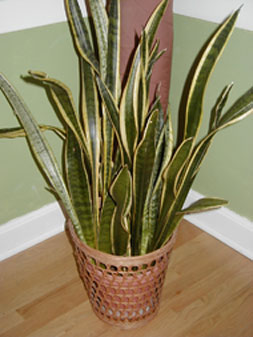
Looking for a plant you can forget about for a month at a time and it will still look great when you finally remember it?  Try sansevieria.  Also known as the snake plant and mother-in-law tongue, this is probably the most tolerant of all houseplants.  It will go without watering for weeks at a time, rarely needs fertilizing and is usually pest free. With its long, spear-like leaves that stand rigidly upright, sansevieria also makes an attractive addition to the indoor garden.  Foliage tends to be variegated in patterns resembling an exotic snake.  You’ll find green foliage accented with cream, white, yellow or lime green. This versatile plant fits into just about any decorating scheme, looking especially striking when highlighted in a contemporary decor.  Under ideal conditions it produces cream-colored flowers that are fragrant at night.

 
Royal, Rocky,Beginnings

Although it’s often referred to as a succulent, sansevieria is actually a member of the agave family. It’s native to the dry, rocky habitats of tropical Africa, and parts of Arabia and India. The plant was named after Raimon de Sangro, who was a little known Prince of Sanseviero and a patron of horticulture. He lived in the 1700s.

sansevieria-potm

 
Growing Tips for Mother-in-Law Tongue (Sansevieria)
  • Lighting.  Put this plant just about anywhere.  It will tolerate very low light to a bright sunroom.  The more light it receives, the more vivid the leaf colors will be and the more it will grow.  (Plants grown in dim locations tend to grow very slowly.)
  • Watering.  Sansevieria is drought tolerant and will only falter if overwatered.  The leaves grow from thick rhizomes and overwatering can lead to leaf and crown rot.  Water only when the soil has dried out, which can be several weeks in some cases.  When you do water, drench the plant, letting the water run out the bottom of the pot.  Avoid wetting the foliage and make sure to keep saucers clear of accumulated water, which will prevent rot and salt build-up.
  • Fertilizing.  Sansevieria needs infrequent feeding. Fertilize once or twice a year with an all-purpose organic food.
  • Trimming and cleaning.  The tough leaves of the snake plant hold up well.  At times, however, a leaf will yellow, wither, or become damaged.  Remove the leaf with a sharp knife or scissors at soil level.
  • Repotting.  Sansevieria have a small root system and do well in the same pot for years.  Repot only when necessary.  Use a cactus mix, or other well draining soil that has plenty of pumice or perlite and some sand.  Repot in a container that is no more than one size larger.
  • Propagate.  If you wish to duplicate leaf color, create new plants from division or offsets. Although you can propagate from leaf cuttings, the resulting plants will lack the same coloring as the parent plant.
  • Pests.  Although pests are rarely a problem, mealybugs can sometimes crop up.  Treat by spraying with isopropyl alcohol.

PrevUltimate Guide to Growing and Caring for Split-Leaf Philodendron (Monstera deliciosa)

Ultimate Guide to Growing and Caring for Split-Leaf Philodendron (Monstera deliciosa)

August 8, 2012
HOME

The Perfect Low-Maintenance Houseplant for Any Indoor Garden

August 8, 2012
NextThe Perfect Low-Maintenance Houseplant for Any Indoor Garden

Healthy Houseplants Blog

  • 5 Indoor Gardening Jobs You Might Not Know Exist—and How to Get Them
  • Why Houseplants Lose Leaves and What You Can Do About It
  • 2026 Is the Year of the Ficus!
  • How A Clean Home Helps Your Indoor Plants Thrive
  • How Landscaping Design Principles Improve Indoor Gardening
  • Trailing Houseplants: What to Know So They Stay Out from Underfoot
  • Gifting for Homebodies: What to Buy for Indoor Gardening Enthusiasts
  • Why Outdoor Mulch Can Kill Indoor Houseplants (And When It Can Be Used Safely)
  • Best Indoor Plant Gifts for Valentine’s Day, Mother’s Day, and Beyond
  • How Indoor Gardens Help Recreate a Sense of Being Outdoors
  • The Best Filter Mask for Indoor Gardeners with Allergies
  • How Digital Tree Management Can Help Indoor Gardeners Stay Organized
  • Water-Wise Habits That Keep Homes And Houseplants Happy
  • Tips for Growing Healthy Houseplants Indoors
  • Hard Water at Home: Causes, Effects on Houseplants, and Solutions
  • How Creative Storage Designs Can Transform Indoor Plant Corners
  • Smart Gardening Tricks That Help Plants Stay Vibrant and Fresh
  • Some Houseplants Can Be Harmful
  • Designing Seamless Transitions: Matching Indoor Plants with Outdoor Spaces
  • 7 Low-Light Indoor Houseplants You’ll Love
  • How to Care for Indoor Houseplants Effectively
  • Chameleon ZZ Plant: The Must-Have Rare Find for Your Indoor Jungle
  • How Indoor Plants Can Bring Life and Style to the Heart of the Kitchen
  • How to Take Proper Care of Your Houseplants When Moving Into a New Home
  • Identifying Termite Damage in Indoor Plants and Decorative Features
img-14
Join Our Newsletter

Join my Happy Indoor Gardener email list. My monthly newsletter teaches you all about growing a beautiful indoor garden. There are also contests and giveaways, and you get a FREE COPY of 11 Easy to Grow, Low Light Houseplants as a thank you for signing up.    

Advertising Partnership Opportunities

Socials

Twitter Facebook Instagram Youtube Linkedin Pinterest Amazon Tiktok Goodreads Mug-hot

Copyright © 2026 Healthy Houseplants. All Rights Reserved.

#garderia_search_69aaa593df131:hover { color: rgba(33,33,33, 1) !important; }