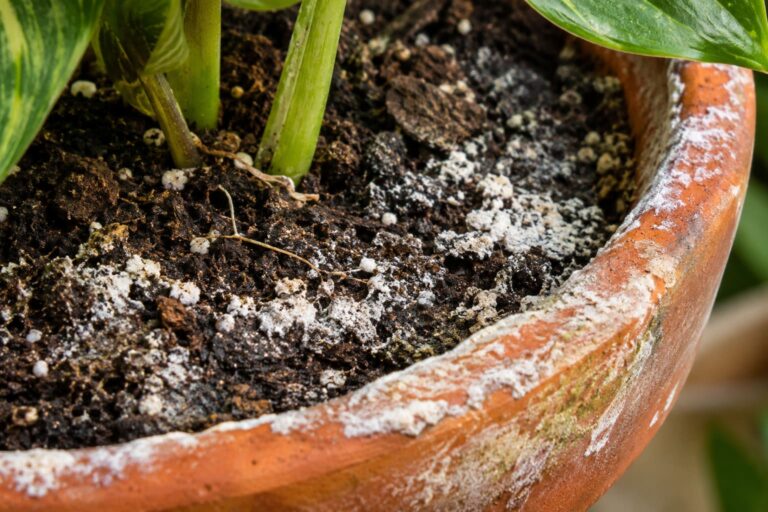
If you’ve noticed a white, crusty substance on the surface of your houseplant soil or around the rim of a pot, you may have a buildup of soluble salts. Left unchecked, excessive salts in potting soil can interfere with your houseplants’ ability to absorb moisture and nutrients, eventually leading to root damage and poor plant health.
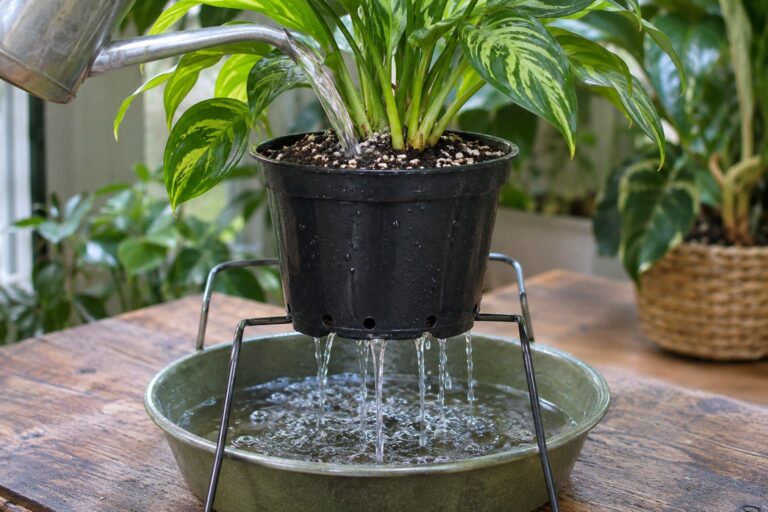
Fortunately, there is a relatively easy way to remove excess soluble salts from houseplant soil. Known in horticultural circles as leaching, the process involves flushing the potting soil with water.
Why Salts Accumulate in Houseplant Soil
Soluble salts accumulate in houseplant soil for a variety of reasons. Fertilizers are a common source, particularly readily soluble synthetic fertilizers. Organic fertilizers can also contribute to salt buildup, especially when applied excessively.
Tap water may contain dissolved minerals and salts, including calcium, magnesium, and sodium. Each time you water your houseplants, some of these substances may remain behind in the potting soil. As water evaporates from the soil surface and plants absorb moisture, the concentration of salts in the remaining soil moisture increases.
Outdoors, Mother Nature helps flush accumulated salts from the soil with rainfall. In the indoor garden, however, it’s up to you to perform this important task when necessary.
Houseplants that are consistently bottom watered or given small amounts of water that never reach the drainage holes are particularly susceptible to salt accumulation.
Signs of Excessive Salt Buildup in Houseplants
Several symptoms may indicate that your houseplant is experiencing excessive salt buildup in the potting soil. These include:
White or yellowish crust on the soil surface
Crusty deposits around the pot rim or drainage holes
Brown leaf tips and margins
Stunted or unusually slow growth
Wilting despite adequately moist soil
Premature yellowing and dropping of leaves
Brown, damaged, or dying roots
Keep in mind that many of these symptoms can also indicate other houseplant problems. Consider your fertilizing and watering practices when determining if excessive salts are the culprit.
Also, not all white deposits indicate harmful concentrations of fertilizer salts. Hard water can leave calcium and other mineral deposits on pots and soil surfaces.
How Excess Salts Damage Houseplant Roots
Healthy houseplant roots absorb moisture from the surrounding potting soil. When the concentration of soluble salts in the soil becomes too high, however, it becomes increasingly difficult for roots to absorb water.
Under extreme conditions, moisture can actually be drawn out of plant root cells. This explains why a houseplant suffering from excessive fertilizer salts may wilt even though the soil is moist.
High concentrations of soluble salts can also damage delicate root tips, interfere with nutrient uptake, and eventually cause root dieback.
Because healthy roots are the foundation of healthy houseplants, it’s important to address excessive salt buildup before significant damage occurs.
How to Flush Houseplant Soil
Follow these steps to leach excess soluble salts from your houseplant potting soil.
Check that the pot has adequate drainage. Before flushing, ensure that the container has unobstructed drainage holes. Remove the plant from any decorative outer pot that doesn’t have drainage holes.
Remove crusty surface deposits. If there is a noticeable accumulation of salts on the soil surface, gently scrape away the affected layer of soil, taking care not to damage any surface roots. Replace the soil you removed with fresh, high-quality organic potting mix.
Choose an appropriate water source. Ideally, use room-temperature rainwater, reverse osmosis water, or distilled water to flush your houseplant soil. If your tap water is relatively low in dissolved salts, it can also be used. Never use water that has passed through a sodium-based water softener, as that is high in salts.
Place the plant where it can drain freely. Depending on the size of the houseplant, you can do this in a sink, bathtub, shower, or outdoors when weather conditions permit.
Slowly flush the potting soil. Pour water evenly over the soil surface, allowing it to flow through the potting mix and out of the drainage holes. As a general guideline, use approximately twice the volume of the container in water. Apply the water gradually, allowing it to drain as you go.
Allow the plant to drain thoroughly. Once you’ve finished flushing the soil, let all excess water drain from the container before returning the plant to its usual location. Don’t allow the plant to sit in the drained water, as this contains the very salts you’re trying to remove.
Resume normal watering when appropriate. Wait until the potting soil reaches the appropriate level of dryness for that particular houseplant before watering again. Avoid fertilizing immediately after flushing if the plant is showing signs of fertilizer burn.
When Flushing Houseplant Soil Isn’t Enough
Flushing is most effective when the potting soil is in good condition and allows water to move freely throughout the root zone.
If the soil has become compacted, drains poorly, or is heavily encrusted with mineral deposits, repotting is a better option. The same is true if you’ve accidentally applied a large quantity of granular fertilizer or the plant is showing signs of significant root damage.
When repotting, examine the root system carefully. Remove dead or rotting roots and replace the old potting soil with a fresh, high-quality organic potting mix appropriate for the plant.
How Often Should You Flush Houseplant Soil?
How often your houseplants require flushing depends on several factors, including the type and amount of fertilizer you use, the mineral content of your water, your watering methods, and the sensitivity of your plants to soluble salts.
If you fertilize regularly or use water high in dissolved minerals, flushing every few months may be beneficial.
If you use low-mineral water, fertilize judiciously, and regularly water your houseplants thoroughly enough that excess water drains from the bottom of the pots, you may find that additional flushing is rarely necessary.
Whenever possible, time routine flushing to coincide with when your houseplant needs watering. This helps avoid unnecessarily saturating the potting soil.
How to Prevent Excessive Salt Buildup in Houseplant Soil
The following indoor gardening practices can help prevent excessive salt accumulation.
Use high-quality organic fertilizers at appropriate application rates.
Avoid fertilizing excessively or feeding plants that aren’t actively growing.
Use rainwater or other low-mineral water sources whenever possible, particularly for salt-sensitive houseplants.
Water thoroughly when your houseplants need watering, allowing excess moisture to drain from the bottom of the container.
If you regularly bottom water your houseplants, periodically water from the top to help flush accumulated salts from the soil.
Empty drainage saucers and decorative outer pots after watering.
Refresh potting soil as needed to maintain healthy growing conditions at the root zone.
Remember that as Mother or Father Nature in your indoor garden, you’re responsible for maintaining a healthy environment both above and below the soil surface. By preventing excessive salt buildup in your houseplant soil, you help ensure that your plants have healthy roots capable of absorbing the moisture and nutrients they need to thrive.
Julie Bawden-Davis is a best-selling garden author, blogger, YouTuber and Master Gardener dedicated to sharing indoor gardening expertise with aspiring gardeners. She has published several gardening books and more than 5,000 articles in major publications. A former garden columnist for the LA Times, San Francisco Chronicle and Parade.com, she is founder of HealthyHouseplants.com and its YouTube channel.
 Julie Bawden-DavisNovember 24, 2026